Travel Documents5 min
How Much Passport Validity You Actually Need
The six-month rule is common, but it is not universal and it is not always measured the same way.
Read GuideAirlines sometimes ask before border officers do. Here is what satisfies the check.
Rules change without notice. Confirm anything time-critical with the airline, airport or border authority handling your journey before you travel. Read our fact checking policy.
A confirmed ticket leaving the country within the permitted stay is the safest form of proof.
Book a refundable onward ticket if plans are open.
Carry a printed copy as well as a digital one.
Keep bus or rail tickets if they cross a border.
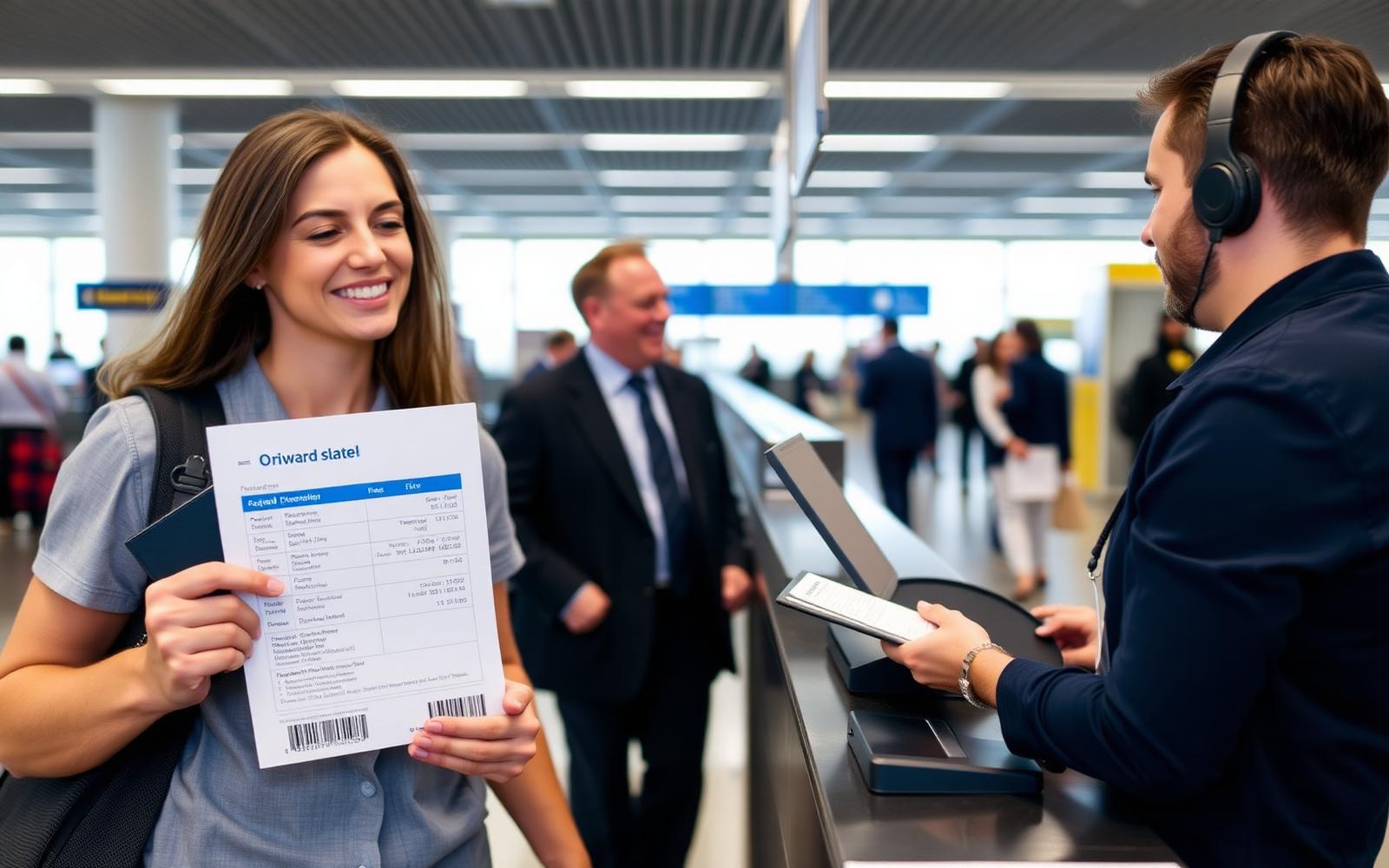
Proof of onward travel catches people who did everything else right. Passport valid, visa sorted, bags packed, and then a check-in agent asks a question nobody prepared for: how are you leaving the country?
For a one-way ticket into a country with strict entry conditions, that question has to have an answer before you board, not after you land. Airlines ask it because immigration authorities can fine them for carrying a passenger who cannot demonstrate they will leave, and that liability gets pushed straight down to the check-in desk.
This guide covers what actually satisfies the check, which document types work best, and how to avoid buying a full-price ticket you never intended to use just to get past the counter.
Countries that issue visas on arrival or visa-free entry for tourism generally expect visitors to leave within the permitted stay. Rather than checking every arriving passenger individually, many governments push that responsibility onto the carrier, with financial penalties if they fly in someone who is later refused entry or overstays.
That is why a Ryanair or LATAM check-in agent, not a border officer, is often the first person to ask about your exit plan. They are protecting the airline from a fine, and denying boarding is cheaper for them than risking it.
| Document | Generally accepted | Notes |
|---|---|---|
| Confirmed one-way onward flight | Yes | Safest and most widely accepted option |
| Refundable onward ticket | Yes | Good for uncertain plans, but check the refund window |
| Verbal statement of intent to leave | No | Not accepted by check-in staff or border officers |
| A booked hotel with no exit ticket | No | Shows accommodation, not departure |
The check usually happens at check-in, most often on one-way tickets into countries such as New Zealand, the Dominican Republic, or several Southeast Asian destinations for visitors arriving without a return flight already booked.
It can also come up again at immigration on arrival, particularly if the officer notices a one-way ticket in the system. Having your onward proof ready twice, once for the airline and once potentially for the border, is worth the small extra effort.
Not every destination asks
Many countries with long visa-free tourist stays, or countries you are entering on a return round-trip ticket, will not raise this at all. The check mainly appears with one-way tickets or open-ended plans.
If your plans genuinely are not fixed, buying a fully refundable onward ticket, even a nearby cheap one, and cancelling it later is a common and legitimate way to satisfy the check. The key is confirming the refund window before you rely on this, since a non-refundable fare booked for this purpose is money wasted.
Book with a card that shows a clear statement descriptor
If you plan to cancel a refundable onward ticket after your trip, keep the confirmation email and refund policy screenshot in case the refund does not process automatically.
Do not buy a ticket you plan to abandon unused
Booking a non-refundable flight purely to show at check-in, with no intention of using or cancelling it, wastes money and some airlines flag the pattern on repeat one-way bookings from the same traveler.
Overland exits
A traveler entering Thailand by air and planning to leave overland into Laos should carry the bus or train ticket for that crossing, since a flight-only proof search will not find an exit plan that never involves a plane.
Digital nomad and long-stay visas
Some long-stay visa categories replace the onward ticket requirement entirely, since the visa itself already demonstrates a defined and approved length of stay.
Round-trip tickets rarely trigger the question
If you already hold a return ticket on the same booking, most check-in agents will not ask further, since the onward leg is self-evident in the reservation.
If a check-in agent refuses to issue a boarding pass because you cannot show an onward plan, ask directly what would satisfy the requirement, since agents sometimes accept a same-day booking made on the spot from a phone. It is not guaranteed, but it has worked for travelers who were simply unprepared rather than genuinely undocumented.
If that fails, the ticket itself is subject to whatever change or refund rules applied when you bought it, so a document problem does not automatically entitle you to a refund unless the fare rules already allow one.
Proof of onward travel is one of the smaller document checks, but it is also one of the easiest to prepare for since the accepted forms of proof are well known. A confirmed onward ticket, printed and saved offline, covers the vast majority of cases.
If your plans are still open, a refundable onward booking bridges the gap without wasting money, as long as you check the refund terms first. Treat this the same way you treat your passport and visa: confirmed before you get to the counter, not improvised there.
This guide was written and checked against the following categories of primary source.
Government travel and entry information
Destination entry requirements, passport validity and minor travel rules published by national authorities.
Border and immigration authority guidance
Transit, airside and visa-on-arrival procedure as published by the authority operating the border.
Travel documentation authorities
Passport issuing offices on condition, damage and replacement rules.
Carrier document requirements
Airline conditions of carriage covering documents checked before boarding.
Related
Guides that answer the questions readers usually have immediately after this one.
The six-month rule is common, but it is not universal and it is not always measured the same way.
Read Guide
Staying airside is not always enough. Some countries require a visa to pass through at all.
Read Guide
Passports, consent letters and birth certificates, what is needed and when.
Read GuideNext steps
Airport Guides
Flight Delays
Travel Planning
Updated 20 July 2026
Updated 14 July 2026
Updated 9 July 2026
Updated 2 July 2026
Newsletter
A short email when a rule changes, a new guide lands, or a document requirement shifts. No promotions, no fares, no noise.
Open the Helpdesk. Eight desks, one structure, and an answer to the question you actually have.