Airport Guides5 min
How Early Should You Arrive at the Airport?
A practical timing model based on flight type, baggage and airport size.
Read GuideSmall preparation habits that consistently save ten to fifteen minutes.
Rules change without notice. Confirm anything time-critical with the airline, airport or border authority handling your journey before you travel. Read our fact checking policy.
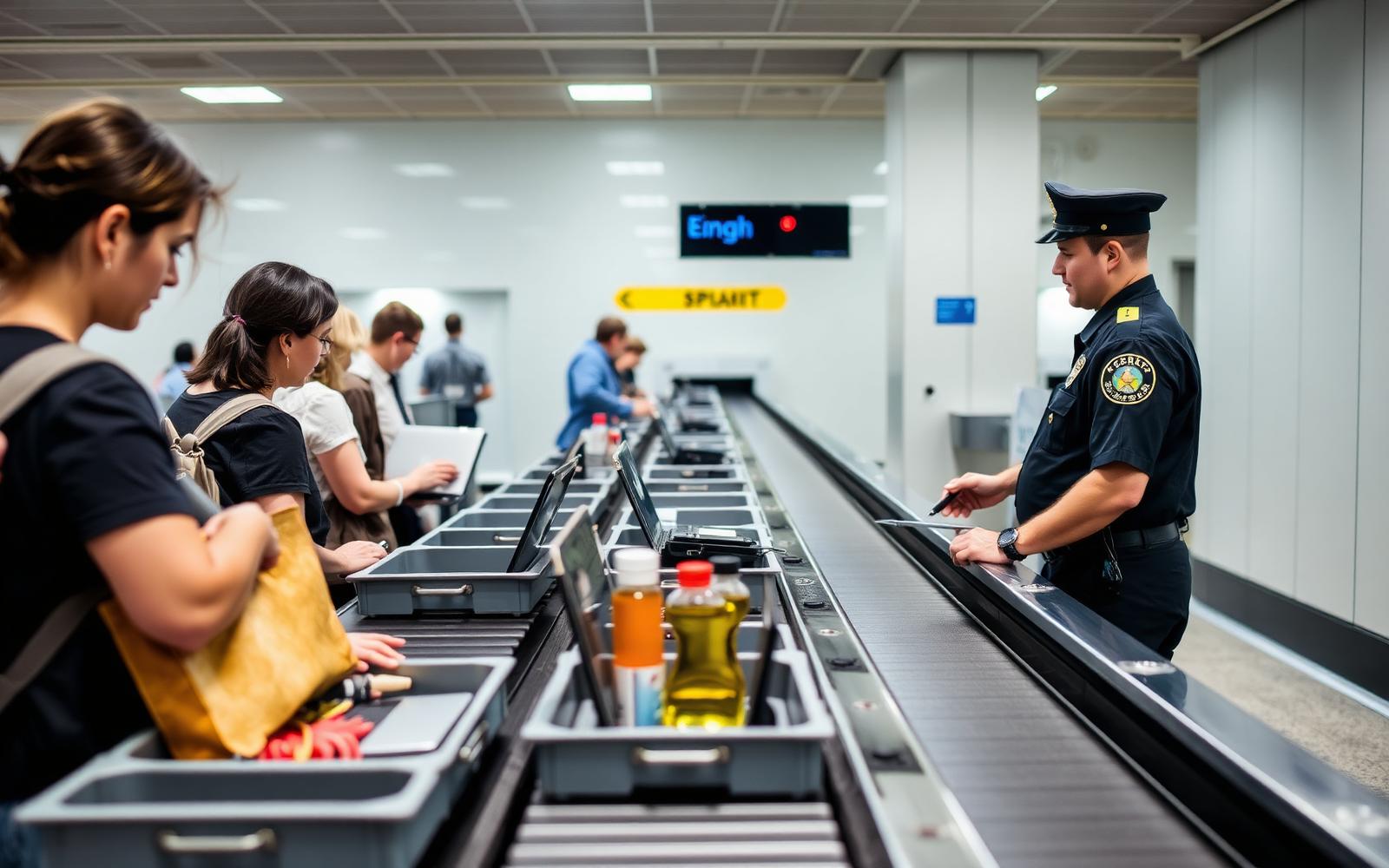
Pack electronics and liquids where you can reach them in one movement, and choose your lane deliberately.
Keep liquids and laptops in an outer pocket.
Avoid lanes with families and large groups when in a hurry.
Wear shoes and a belt that come off quickly.
Security is the least predictable part of a departure. The walk to the gate is a known quantity, check-in is usually done on a phone, but the queue can be four minutes or forty depending on the hour, the airport and how the people in front of you packed.
You cannot control the queue length. You can control almost everything that happens once you reach the belt, and that is where most of the avoidable delay sits. A traveler who has to unpack a bag at the tray table costs themselves two or three minutes and everyone behind them the same.
This guide covers packing for screening, choosing a lane, the rules that vary by country, and the schemes worth joining if you fly more than a few times a year. The habits below reliably save ten to fifteen minutes, and more importantly they remove the part of the process that goes wrong.
The single biggest time cost at security is digging. If your laptop is under three layers of clothing and your liquids are in a side pocket you have to unzip, you have already lost two minutes before the tray moves.
Do the unpacking in the queue
The five minutes shuffling toward the belt are free time. Take the laptop out, unzip the liquids, take off your coat and hold everything in one stack. When you reach the trays you load in one movement instead of five.
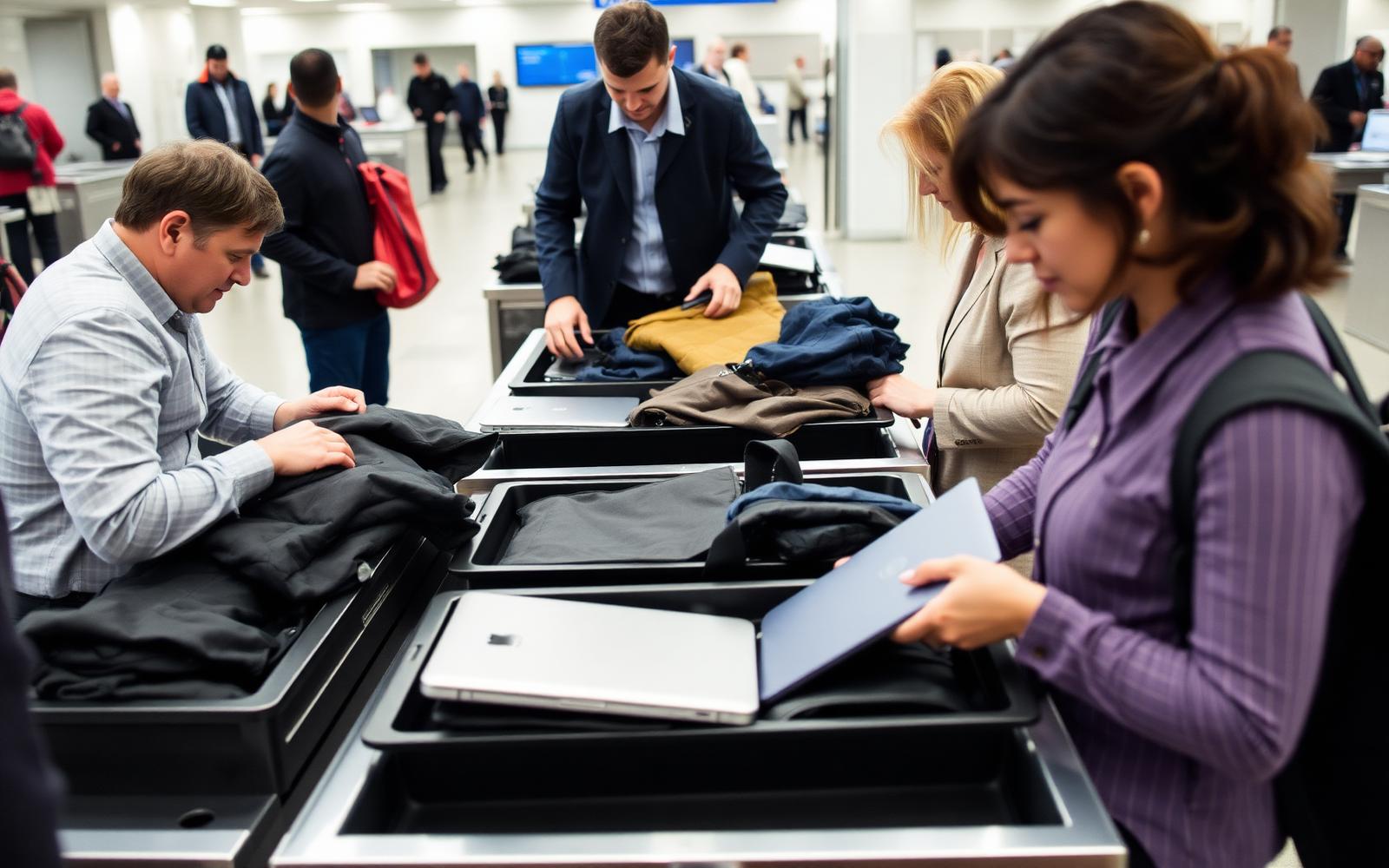
The 100 ml liquid limit has been standard for years, but next generation CT scanners are gradually removing the need to separate liquids and laptops. Rollout is uneven, so the safest approach is to pack as though the old rules apply and enjoy it when they do not.
| Airport | Liquids out of bag? | Laptops out of bag? |
|---|---|---|
| London Heathrow | Varies by lane | Varies by lane |
| Amsterdam Schiphol | Generally no | Generally no |
| Frankfurt | Yes at most lanes | Yes at most lanes |
| Singapore Changi | Generally no | Generally no |
| Most US airports, standard lanes | Yes | Yes |
| US TSA PreCheck lanes | No | No |
Do not assume the new rules apply because you read about them
Several airports announced CT scanner rollouts and then reverted to the 100 ml rule at some lanes while equipment was validated. Pack liquids in a compliant bag every time. If the lane does not need it, you have lost nothing.
Queue length is a poor predictor of queue speed. What matters is how many trays each person in front of you will generate and how quickly they will clear the belt.
The counterintuitive queue
At Copenhagen Kastrup a traveler picks the longer left-hand queue over the short right-hand one, because the left lane has four automated tray positions and the right has two manual ones. The longer queue clears in seven minutes. The shorter one is still moving fifteen minutes later.
Automated tray return lanes are usually worth a longer queue
Lanes with parallel loading positions and automatic tray recirculation process roughly twice the passengers per hour of a manual single-position lane. If you can see rollers returning trays automatically, join that queue even if it looks longer.
Security load follows the departure schedule, and departure schedules cluster. Most airports have two or three sharp peaks a day, and the difference between arriving inside one and outside it is larger than any packing improvement.
| Time of day | Typical load | Notes |
|---|---|---|
| 04:30 to 06:30 | Very heavy | First wave of short-haul departures |
| 07:30 to 09:00 | Heavy | Business travel peak on weekdays |
| 10:00 to 11:30 | Light | The best window at most European hubs |
| 12:00 to 14:00 | Moderate to heavy | Long-haul departure bank |
| 15:00 to 17:00 | Moderate | Varies widely by airport |
| After 19:00 | Light | Except at leisure-heavy airports in summer |
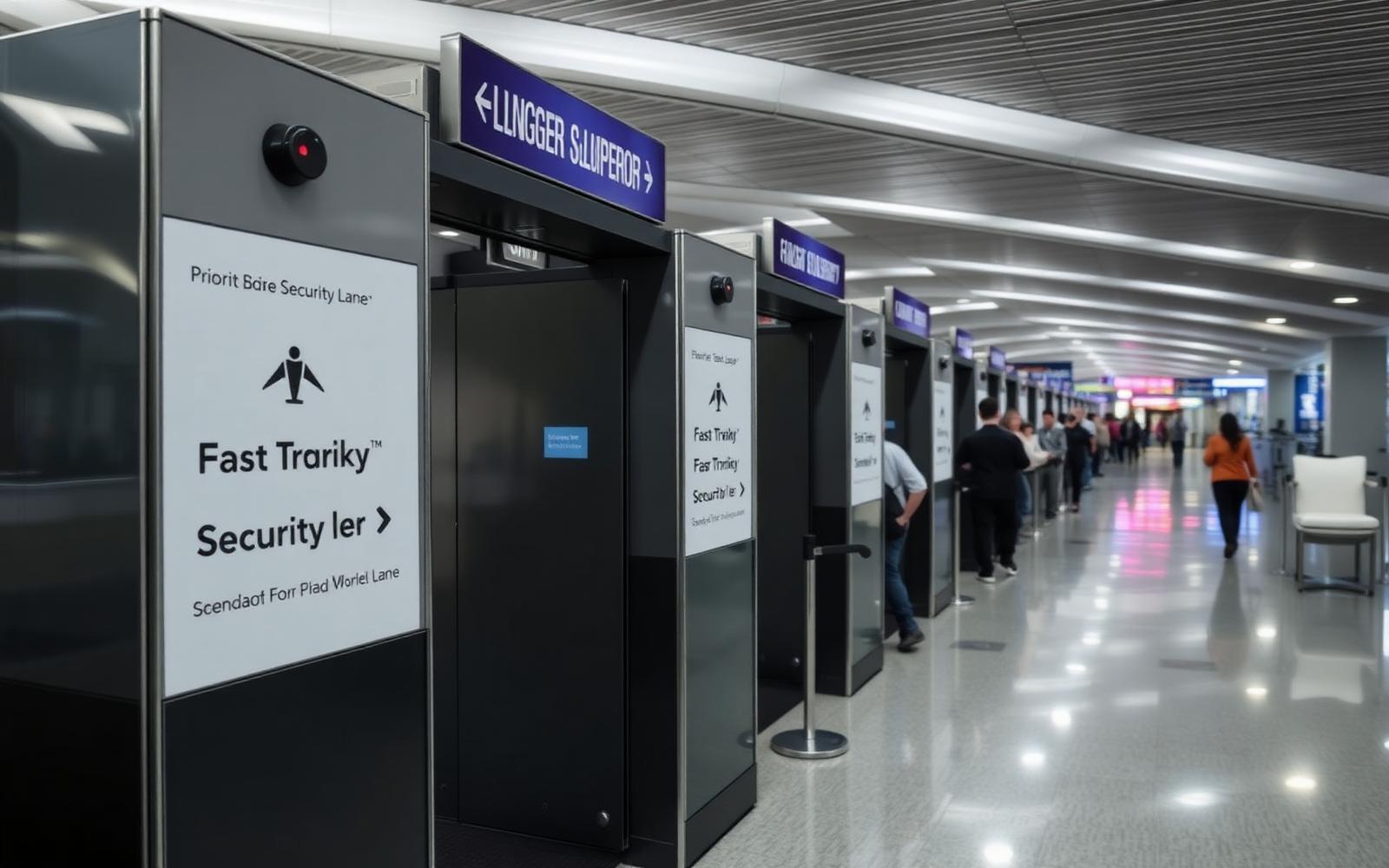
If you fly more than three or four times a year, one of these usually pays for itself in the first trip, mostly by removing variance rather than by saving a fixed number of minutes.
Buy fast track at the airport, not from a reseller
Airport websites sell their own fast track directly and usually more cheaply than third-party resellers. Buy it the night before, when you can see the forecast queue times for your departure hour.
A manual bag search costs more than everything else combined
Being pulled aside typically adds between five and fifteen minutes, and at busy times you wait for an available officer before the search even starts. Almost every trigger is avoidable through packing: liquids, batteries, dense clusters of cables and food items are the usual causes.
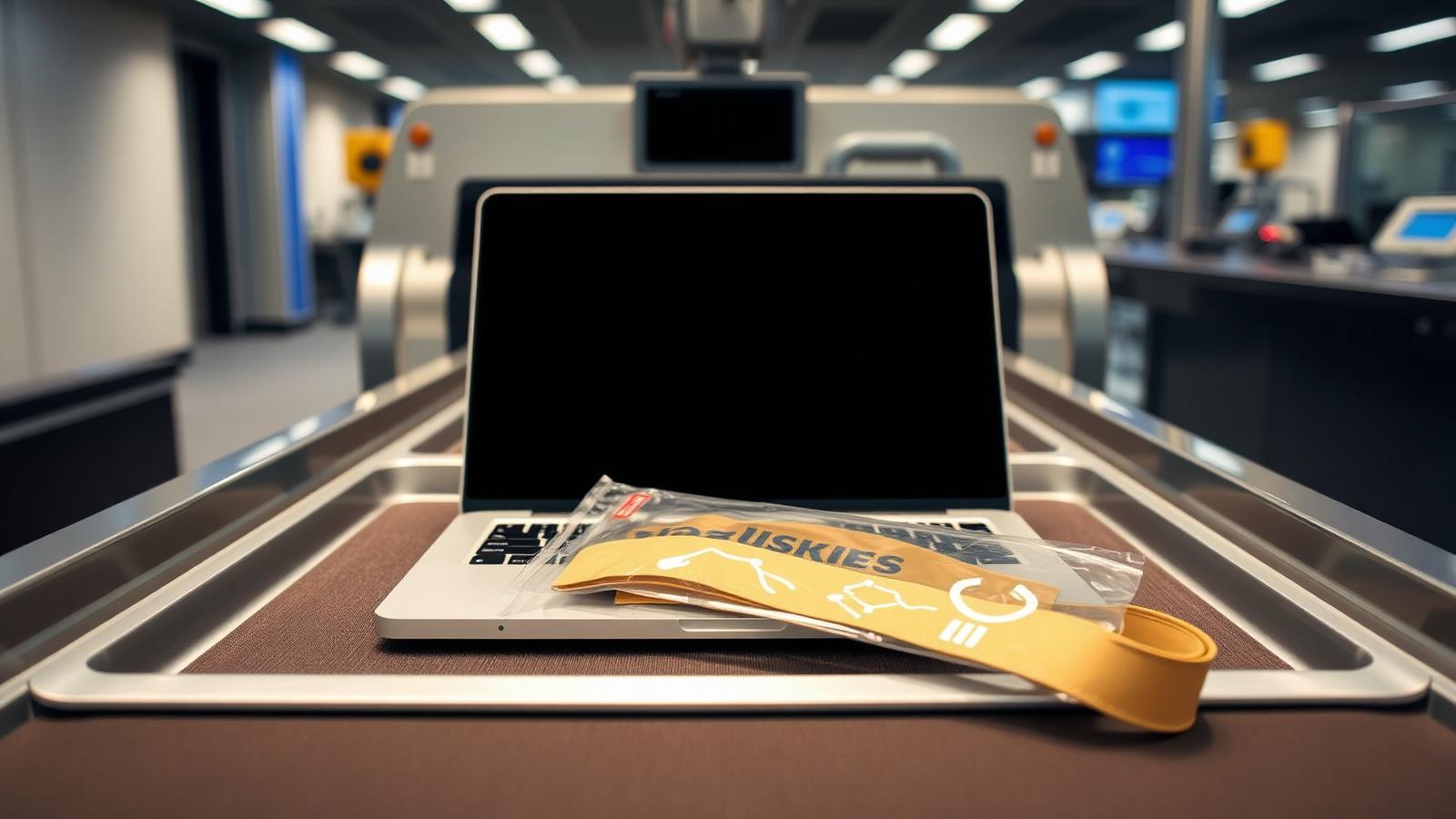
Most of the time lost at security happens after you reach the belt. Packing the laptop and liquids where you can reach them in one movement, and emptying pockets while still in the queue, is worth more than any other single habit.
Lane choice matters, but not the way people assume. Count loading positions and open machines rather than heads, and avoid lanes with pushchairs and large groups.
Timing beats technique. Mid-morning is consistently the lightest window at most hubs, and many airports publish forecast wait times or free security time slots you can book in advance.
For frequent travelers, PreCheck, Global Entry or an airport fast track pass removes the variance rather than a fixed number of minutes, which is the part that actually protects a tight schedule.
This guide was written and checked against the following categories of primary source.
Airport authority guidance
Terminal layouts, transfer times, security procedure and check-in cut-offs.
Transportation authorities
Screening rules and permitted items at the security checkpoint.
Official airline check-in policies
Carrier-specific closing times for bag drop and boarding.
Related
Guides that answer the questions readers usually have immediately after this one.
A practical timing model based on flight type, baggage and airport size.
Read Guide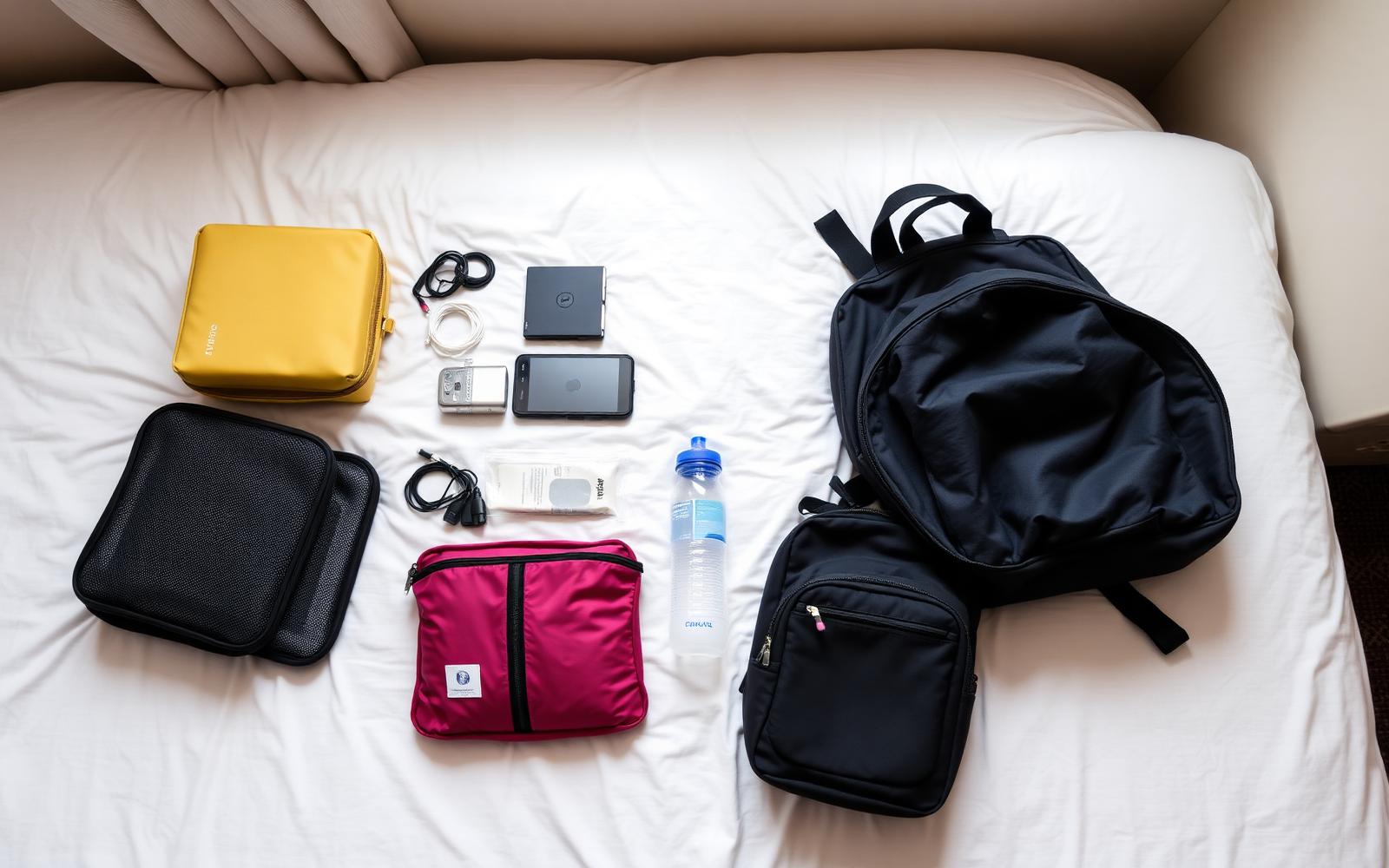
The short list that turns a lost bag into an inconvenience rather than a crisis.
Read Guide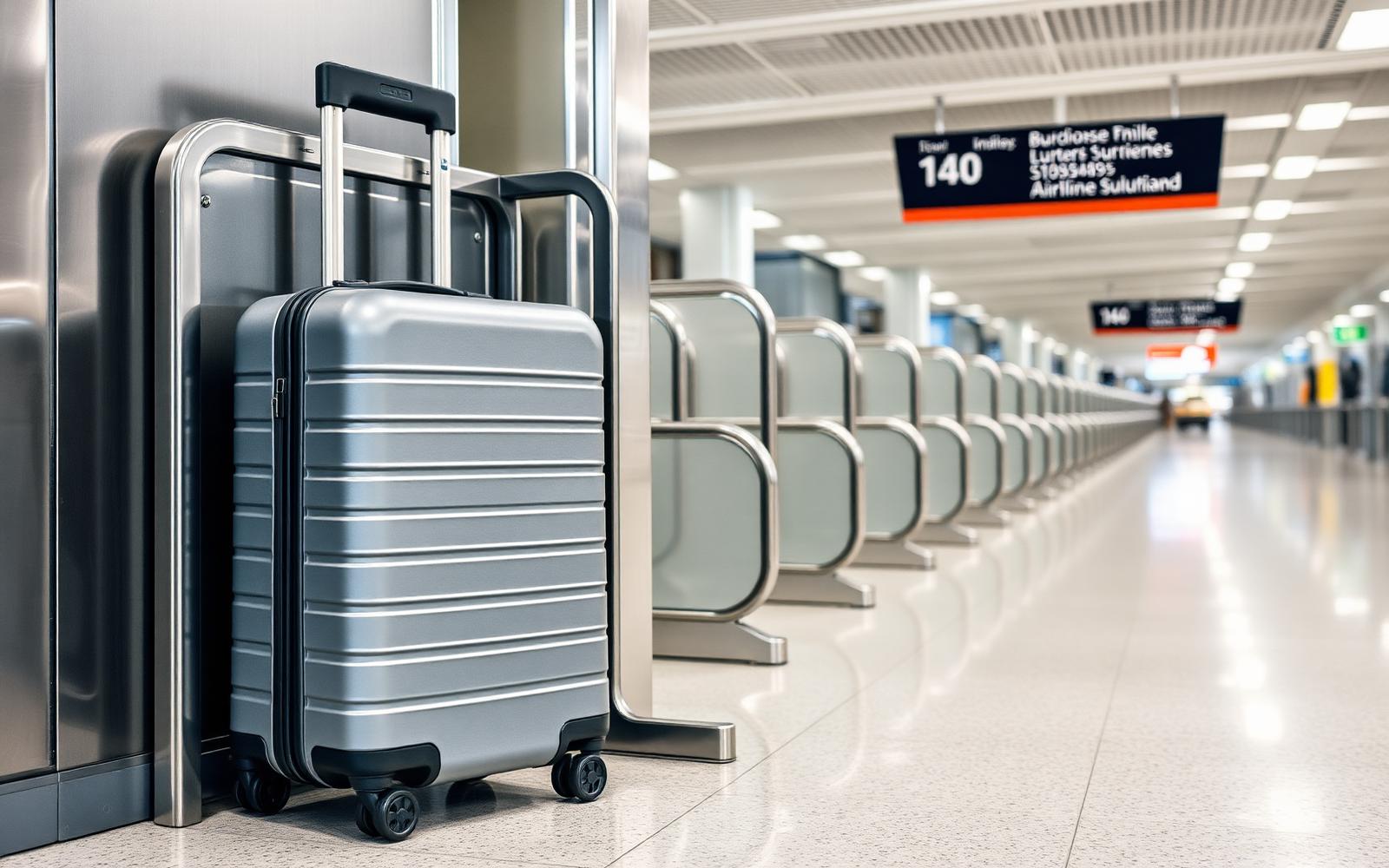
The sizer decides, not the label on your suitcase. Here is how to pass it every time.
Read GuideNext steps
Travel Documents
Refund Help
Travel Change Desk
Updated 14 July 2026
Updated 9 July 2026
Updated 2 July 2026
Updated 25 June 2026
Newsletter
A short email when a rule changes, a new guide lands, or a document requirement shifts. No promotions, no fares, no noise.
Open the Helpdesk. Eight desks, one structure, and an answer to the question you actually have.