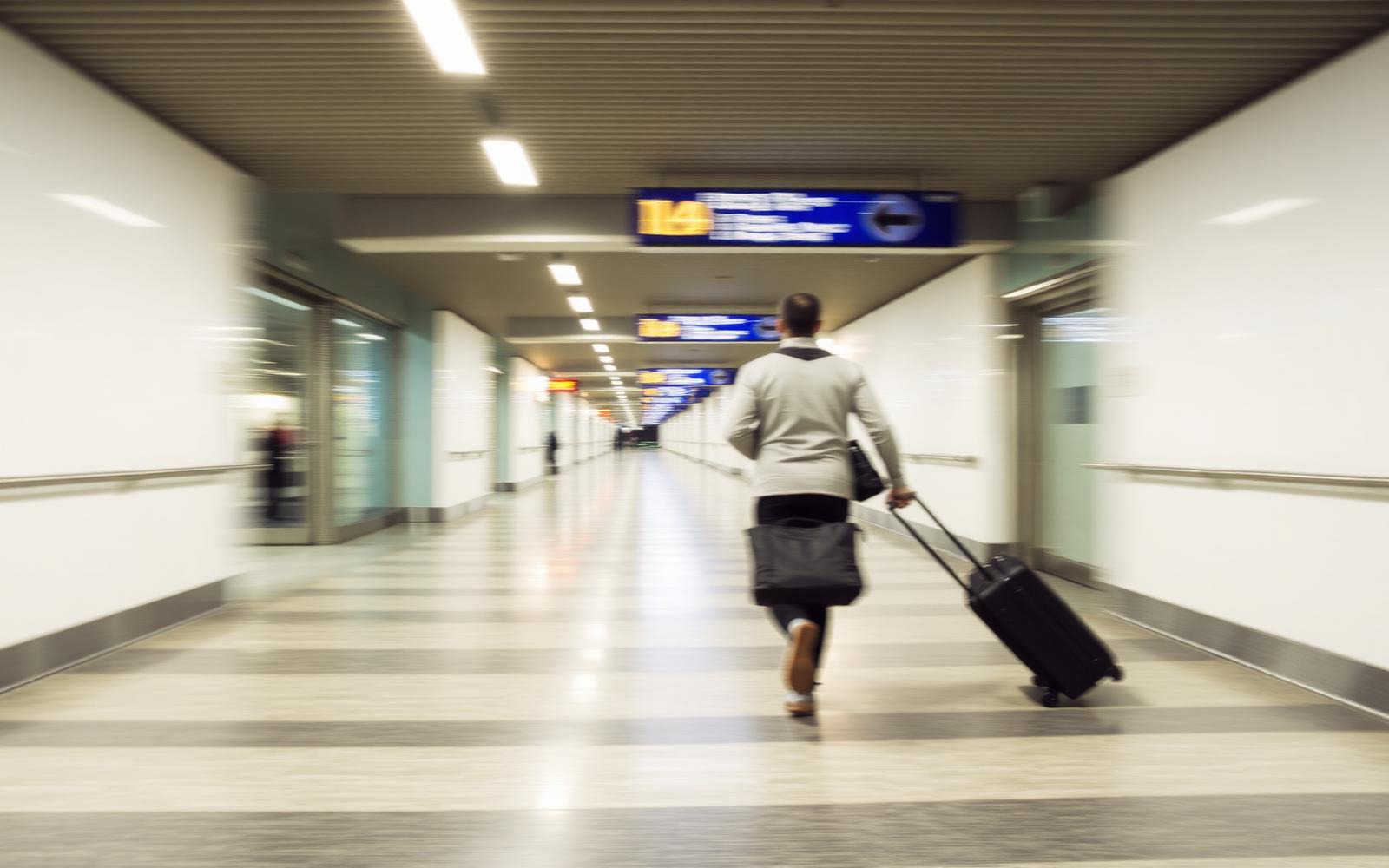
How Much Connection Time Is Genuinely Safe?
Minimum connection times are a legal floor, not a recommendation. Here is how to build a realistic buffer.
Read GuideWhen it is realistic, when it is reckless, and how to time it safely.
Rules change without notice. Confirm anything time-critical with the airline, airport or border authority handling your journey before you travel. Read our fact checking policy.
You need legal entry rights and roughly eight hours before it becomes comfortable.
Confirm entry permission for your nationality first.
Return three hours before your next departure.
Store luggage rather than dragging it into the city.
Ten hours in Singapore. Twelve in Istanbul. Eight in Reykjavik on the way to somewhere else entirely.
Long layovers like these are common on routings built around a hub, and the question that follows is always the same: is it worth leaving the airport, or should you just wait it out at the gate.
The honest answer depends on three things that have nothing to do with how bored you are: whether your passport lets you enter without a visa, how much buffer you actually have once you subtract immigration, transport and re-entry, and whether your bags are checked all the way through or sitting with you.
Below is how to make that call properly, city by city and airport by airport, instead of guessing.
Some airports offer a transit visa or visa-free transit window specifically for passengers changing planes, and it is worth checking whether that applies to you before assuming you can simply walk out.
Do not guess based on another traveler's experience
Entry rules depend on your specific nationality and sometimes on your onward destination. A friend who left Istanbul airport freely on a European passport tells you nothing about what a different passport allows.
Changi offers a free city tour for eligible transit passengers with enough layover time. Singapore also allows many nationalities visa-free entry for short stays, which makes an eight hour layover genuinely usable. Dubai DXB similarly allows visa-on-arrival access for a long list of nationalities, making a short trip into the city realistic.
A ten hour layover does not give you ten hours in the city. Subtract immigration on both ends, transport time, and a real safety buffer before your next flight.
| Layover length | Realistic city time | Recommendation |
|---|---|---|
| Under 5 hours | Not enough | Stay airside |
| 5 to 8 hours | 1 to 2 hours, only if transport is fast | Only for well connected airports |
| 8 to 12 hours | 3 to 5 hours | Comfortable if entry is easy |
| Over 12 hours | 6 hours or more | Worth planning properly |
Return three hours early
Treat your return to the airport as its own trip with its own risk of delay. A three hour buffer before departure protects you from traffic, a slow immigration queue, or a security line that runs long.
If your bag is checked through to your final destination, it stays with the airline and you leave the airport light, which is the ideal case. If you are carrying it yourself, most large hubs including Zurich HB adjacent stations and Frankfurt airport itself have left luggage counters or lockers.

Pick transport that is fast and, more importantly, predictable. A train with a fixed schedule beats a taxi in unpredictable traffic, especially in cities like Istanbul where road congestion is severe at almost any hour.
Recieve your return ticket details in writing
If you book a shuttle or tour through a third party, keep the confirmation with pickup times and a phone number, in case anything runs late.
A generous layover is not always a safe one. If your next flight is the last of the day, if you are traveling with young children, or if the destination city has notoriously unpredictable traffic like Jakarta or Lagos, staying airside is often the calmer choice.
A missed connection in Dubai
A traveler who left DXB on a ten hour layover to see the city returned to find security lines longer than expected due to a temporary staffing shortage, and missed the boarding cutoff by six minutes. The airline was not obligated to help since the delay happened after they had voluntarily left the airport.
Some hubs are simply built for this. Others are not.
Save the airline's contact number and know the location of the nearest transfer desk in case your return transport runs late. If your flights are on separate tickets, missing the next one because you left the airport is entirely your own risk, so build in more margin than you think you need.
Leaving the airport during a long layover can turn a wasted day into a real visit to a new city, but only when the entry rules, the timing and the transport all line up.
Work backward from your next departure, subtract immigration and transport time twice, and treat the return trip as seriously as the outbound one.
Done carefully, even a layover in a place like Istanbul or Singapore can become a genuine part of the trip rather then a risk you regret taking.
This guide was written and checked against the following categories of primary source.
Airport authority guidance
Terminal layouts, transfer times, security procedure and check-in cut-offs.
Transportation authorities
Screening rules and permitted items at the security checkpoint.
Official airline check-in policies
Carrier-specific closing times for bag drop and boarding.
Related
Guides that answer the questions readers usually have immediately after this one.
Minimum connection times are a legal floor, not a recommendation. Here is how to build a realistic buffer.
Read Guide
Where slack actually protects you, and where it just wastes a day.
Read Guide
The uncomfortable answer, and the three moves that limit the damage.
Read GuideNext steps
Travel Change Desk
Airline Rules Desk
Travel Documents
Updated 20 July 2026
Updated 14 July 2026
Updated 9 July 2026
Updated 25 June 2026
Newsletter
A short email when a rule changes, a new guide lands, or a document requirement shifts. No promotions, no fares, no noise.
Open the Helpdesk. Eight desks, one structure, and an answer to the question you actually have.