
Airport Guides6 min
How Terminal Transfers Work at Large Airports
Trains, buses and long walks, and how much time each one really takes.
Read GuideMinimum connection times are a legal floor, not a recommendation. Here is how to build a realistic buffer.
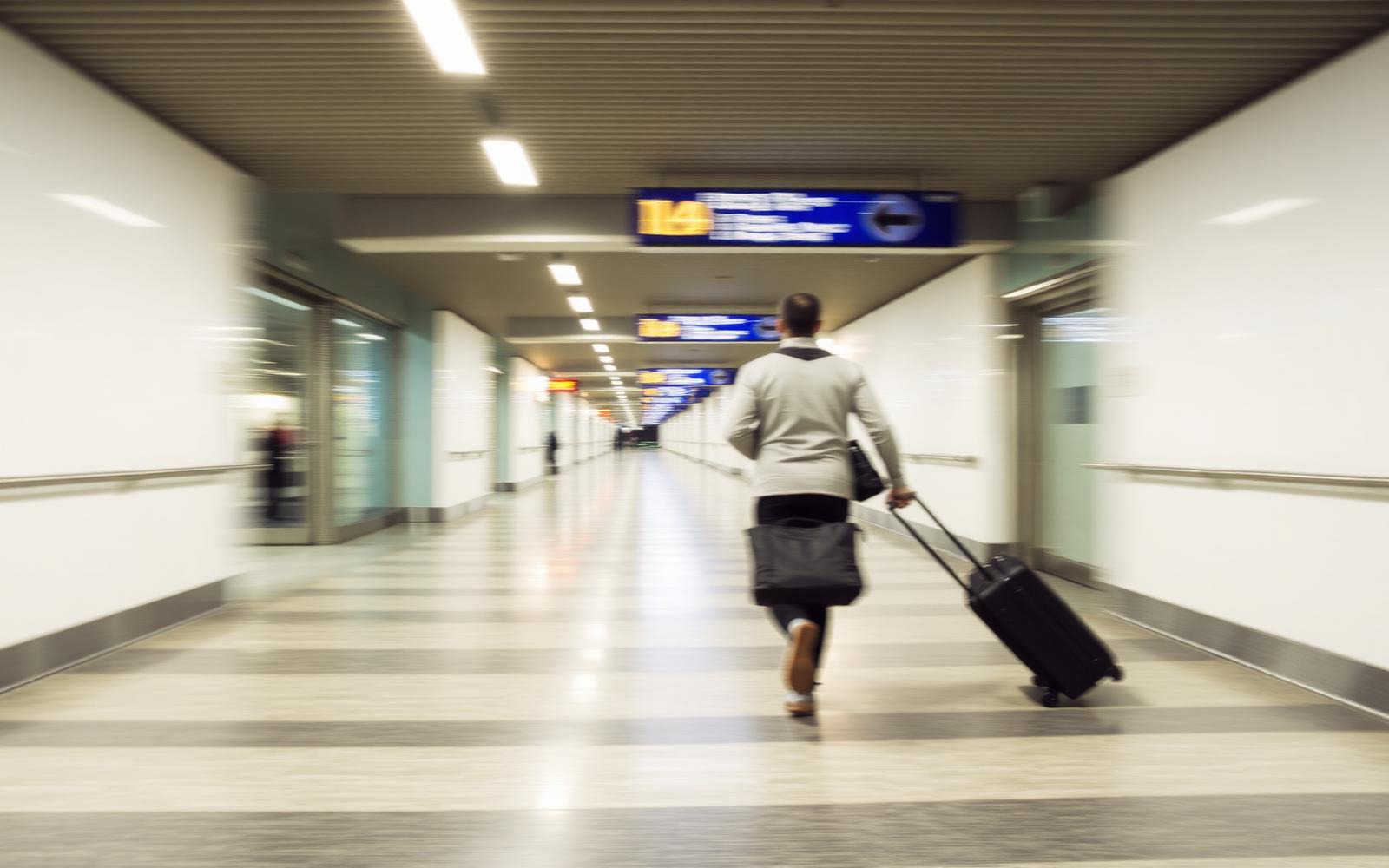
Rules change without notice. Confirm anything time-critical with the airline, airport or border authority handling your journey before you travel. Read our fact checking policy.
For a single ticket, ninety minutes domestic and two hours international is a comfortable working baseline.
Add time for terminal changes, passport control and re-checked baggage.
Avoid the last connection of the day where possible.
Prefer connections in airports you already understand.
A booking engine will happily sell you a fifty five minute connection at Charles de Gaulle 2E because the airport's official minimum connection time allows it on paper. That number tells you the fastest a healthy, alert passenger with no queue could theoretically make it between two specific gates. It does not tell you what happens when your inbound flight lands twelve minutes late, or when passport control has three officers on duty instead of eight.
This guide is about the gap between the legal minimum and a connection you can actually rely on. It walks through how minimum connection times are set, why they vary so much between airports, and how to build a personal buffer that matches the airport, the season and the itinerary in front of you.
None of this is about being fearful of tight connections. Plenty of travelers make forty minute changes at Amsterdam Schiphol every day without incident. The goal is to know, before you book, whether the layover you are looking at behaves like a normal connection or a bet.
Every airport publishes a minimum connection time, or MCT, for different combinations of arriving and departing flights. Domestic to domestic is usually the shortest. International to international, especially where a passport check sits in the middle, is the longest.
The MCT is calculated by the airport authority based on typical walking distances, typical queue lengths and the layout of security and immigration. It assumes the inbound flight lands on time and that you walk at a normal pace without getting lost.
| Connection type | Typical MCT range | Example airport |
|---|---|---|
| Domestic to domestic | 30 to 45 minutes | Delta at Atlanta |
| Domestic to international | 45 to 75 minutes | JFK Terminal 4 |
| International to international, same terminal | 60 to 90 minutes | Singapore Changi |
| International to international, terminal change | 90 to 150 minutes | Heathrow T5 to T3 |
| International with a new passport check | 120 to 180 minutes | Istanbul Airport |
Airlines can require more than the airport minimum
Lufthansa and other network carriers sometimes set their own higher minimums for specific routings, particularly where a re-check of hold luggage is involved. If a booking site lets you select a connection shorter than the airline's own rule, that is usually a sign the system has not caught it, not that the airline has cleared it.
The MCT is a floor, calculated for a good day. It does not build in the ten minutes a jet bridge takes to connect, the bus that ferries you from a remote stand at Dubai DXB, or the fact that your inbound gate and outbound gate happen to be at opposite ends of a two kilometer terminal.
Last flight of the day risk
If your connection is also the last flight of the day to your destination, a missed connection does not just mean a later arrival. It usually means an overnight stay, on top of losing recieve of your original seat assignment and any pre-booked transport at the other end. Treat evening connections with more buffer than the same routing earlier in the day.
A single number like ninety minutes is a reasonable starting baseline, but it should move depending on where you are connecting. Zurich HB style compact single-terminal airports need less padding than sprawling multi-terminal hubs.
Two versions of the same trip
A traveler flying Lagos to Frankfurt to Zurich with a single ticket and through-checked bags can comfortably work with a 100 minute connection, since Frankfurt's Schengen transfer for that pairing is efficient. The same traveler flying Lagos to Istanbul to Zurich, changing terminals and re-clearing a passport check, should look for at least 150 minutes on the same route.
If both flights are on one ticket, the airline is responsible for getting you to your destination if the connection fails because of their delay. They will typically rebook you on the next available flight and, where required by their own rules or by regulation, cover a meal or hotel.
If you booked two separate tickets, sometimes called a self-transfer, a missed connection is your problem to solve. The second airline owes you nothing if the first flight ran late, because as far as they know you are simply a passenger who did not show up.
Check the fare rules before trusting a tight self-transfer
Some booking platforms sell a guarantee product specifically for self-transfers that covers rebooking costs if the first flight is delayed. If you are building your own itinerary from separate tickets, either buy that protection or add far more buffer than you would on a single ticket.
Airport websites usually publish terminal maps and, for major hubs, average security and immigration wait times by hour. Ten minutes checking these before booking tells you more than any generic rule of thumb.

If your inbound flight is delayed and your connection is at risk, act as soon as boarding closes on your first flight, not after landing. Cabin crew can often radio ahead, and some airlines will hold a connection for a handful of passengers if enough of you are affected and the delay is short.
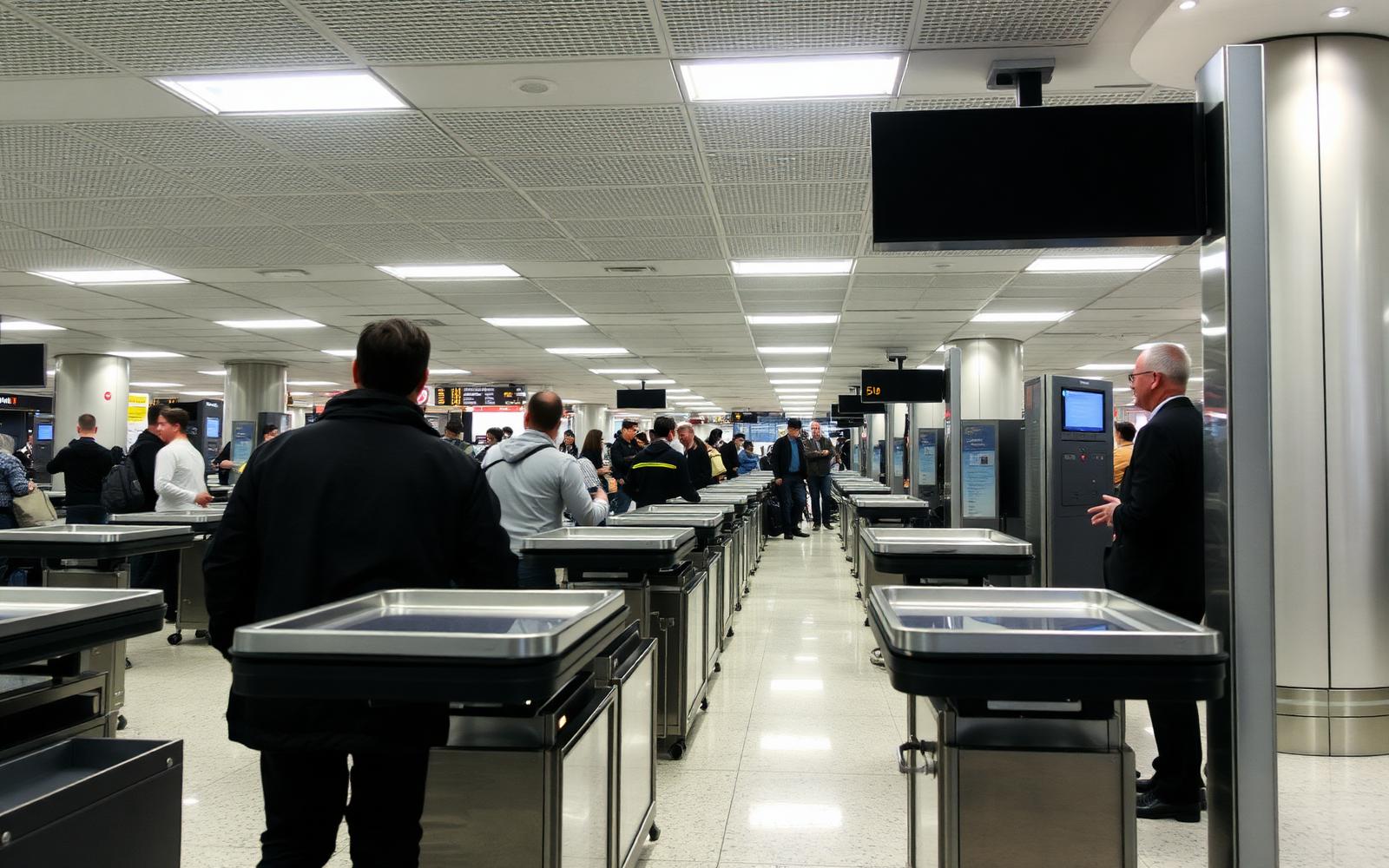
Summer thunderstorm season in the United States routinely produces rolling delays through Atlanta and Chicago that ripple across the whole network. Winter fog is a recurring issue at London Heathrow and Milan Malpensa. If you are connecting through either region in the relevant season, add time even if the specific flights show no history of delay.
Some regions also run tighter staffing at immigration during off-peak hours, which can paradoxically make a very early morning connection slower than a mid-afternoon one, since fewer officers are on duty to handle the same aircraft loads.
A safe connection time is not a fixed number you can memorize once and reuse everywhere. It is a judgment that changes with the airport's layout, the season, whether your bags are through-checked, and whether both flights sit on one ticket.
Treat the airport's published minimum as the floor, not the target. Add time for terminal changes, immigration checks and evening connections, and check the layout yourself rather than trusting a booking engine to have done it for you.
When a connection does get tight on the day, speed of action matters more than anything else. Tell the crew early, move straight to the gate on arrival, and if it fails anyway, go to the transfer desk before you consider any other option.
Related
Guides that answer the questions readers usually have immediately after this one.
Trains, buses and long walks, and how much time each one really takes.
Read Guide
Three actions in the air and on the ground that keep your itinerary alive.
Read Guide
Where slack actually protects you, and where it just wastes a day.
Read GuideNext steps
Travel Change Desk
Travel Documents
Airport Guides
Updated 20 July 2026
Updated 14 July 2026
Updated 9 July 2026
Updated 2 July 2026
Newsletter
A short email when a rule changes, a new guide lands, or a document requirement shifts. No promotions, no fares, no noise.
Open the Helpdesk. Eight desks, one structure, and an answer to the question you actually have.