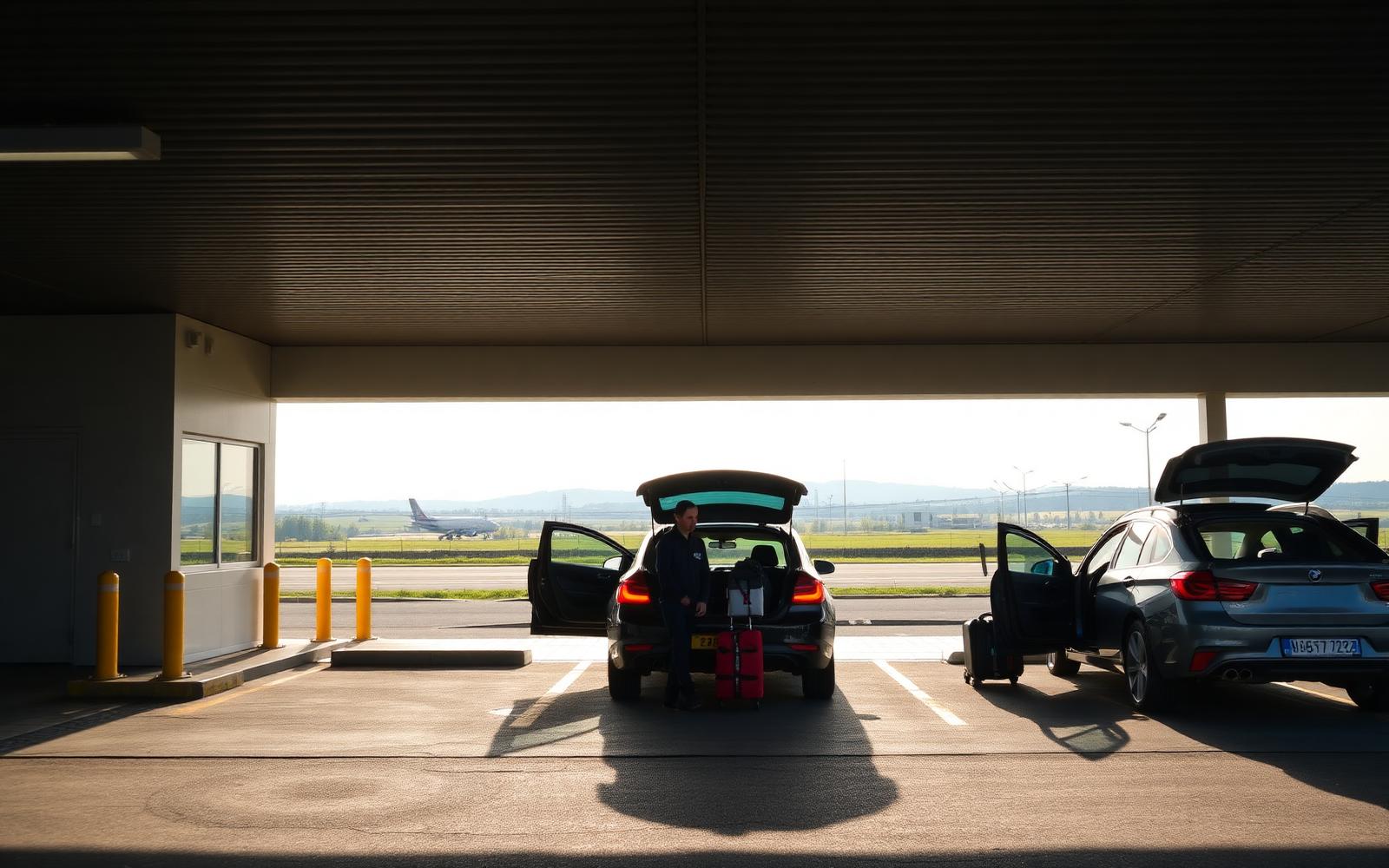
Is Flying Into a Nearby Airport Actually Cheaper?
The fare looks better. Then ground transport, timing and risk enter the calculation.
Read GuideRail can replace a weak short-haul leg and remove an entire failure point from your trip.
Rules change without notice. Confirm anything time-critical with the airline, airport or border authority handling your journey before you travel. Read our fact checking policy.
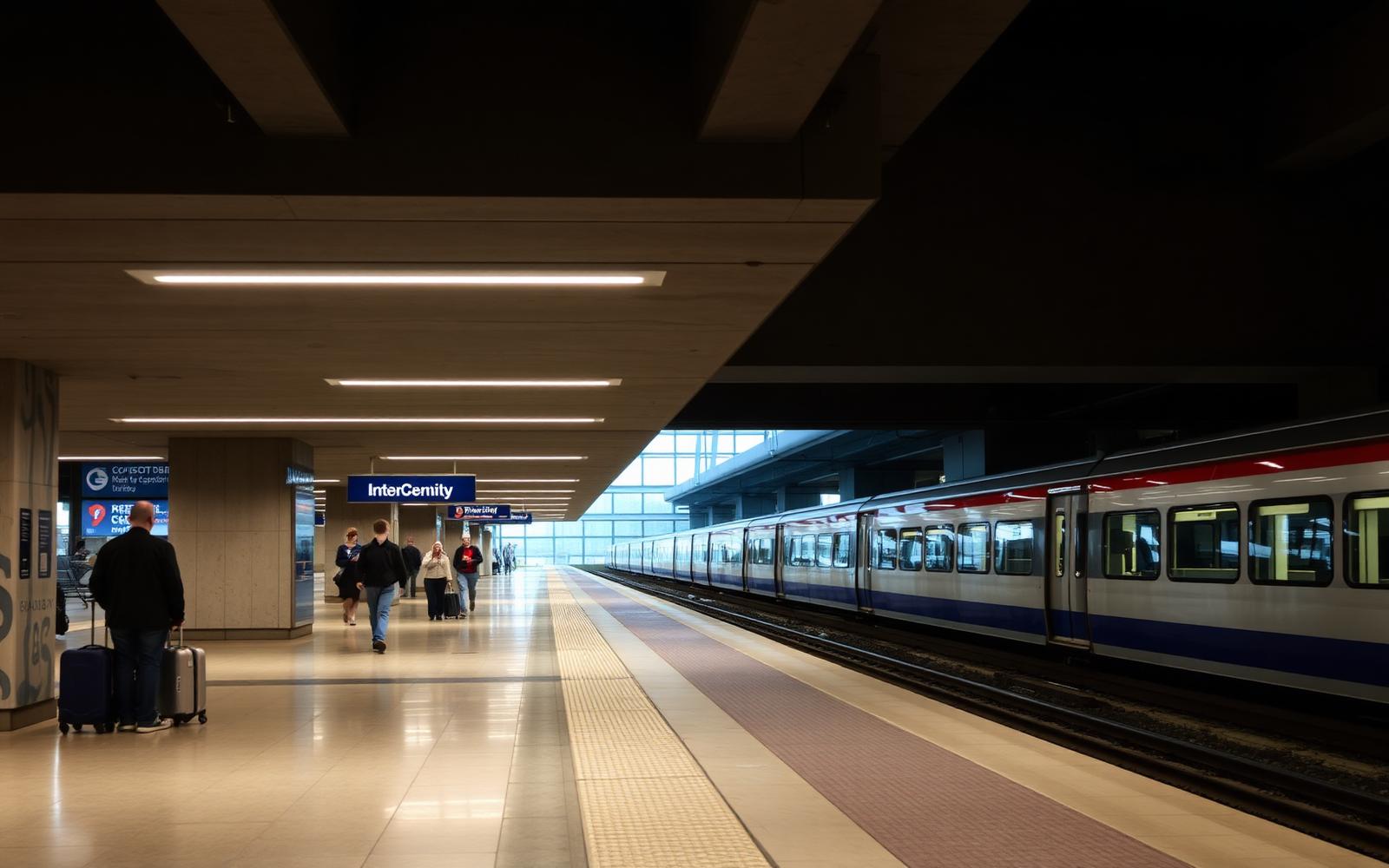
Rail works best as the first or last leg, with a buffer that treats it as a separate ticket.
Look for air-rail products that protect the whole journey on one ticket.
Book a train that arrives at least three hours before departure.
Check which station serves the airport terminal directly.
Short-haul feeder flights are the weakest part of most long journeys. They are the first to be cancelled when an airline is short of aircraft, the first to be delayed by air traffic flow restrictions, and they add a full airport process at both ends for a distance a train often covers faster.
Replacing that leg with rail removes a failure point. Cologne to Frankfurt Airport takes under an hour on an ICE that arrives directly beneath the terminal. Brussels to Paris Charles de Gaulle is about 80 minutes on a direct TGV. Neither involves a security queue, a boarding gate or a baggage belt.
The catch is protection. A train and a flight are usually two separate contracts, and if the train runs late, the airline is not obliged to care. This guide covers when rail genuinely improves an itinerary, which air-rail products protect the whole journey, and how much buffer to leave when nothing protects it at all.
The honest comparison is station door to airport terminal, not train time against flight time. A 55 minute flight becomes three and a half hours once you add getting to the airport, check-in, security, boarding and the walk out at the other end.
| Journey | Rail time | Flight time | Realistic total by air |
|---|---|---|---|
| Cologne to Frankfurt Airport | About 1 h | 45 min | Around 3 h 30 |
| Brussels Midi to Paris CDG | About 1 h 20 | 50 min | Around 3 h 30 |
| Lyon Part-Dieu to Paris CDG | About 2 h | 1 h | Around 3 h 45 |
| Zurich HB to Zurich Airport | 10 min | Not applicable | Not applicable |
| Manchester to London Heathrow | About 2 h 30 via Euston | 1 h 15 | Around 4 h |
| Tokyo Station to Narita | About 1 h on the N'EX | Not applicable | Not applicable |
As a working rule, rail wins outright under about 500 kilometres when the station sits inside the airport, and stays competitive up to roughly 800 kilometres on a high speed line. Beyond that, the feeder flight usually reclaims the advantage unless the connection is unusually poor.
Rail also wins on reliability, not just time
A cancelled train normally means the next train, often within the hour. A cancelled regional flight can mean the next day, especially on routes with one or two daily rotations. That difference matters more than a twenty minute time saving.
Airport stations vary enormously. Some are long-distance stations under the terminal. Others are local commuter halts with a 15 minute shuttle bus attached, which is a completely different proposition when you are carrying bags.
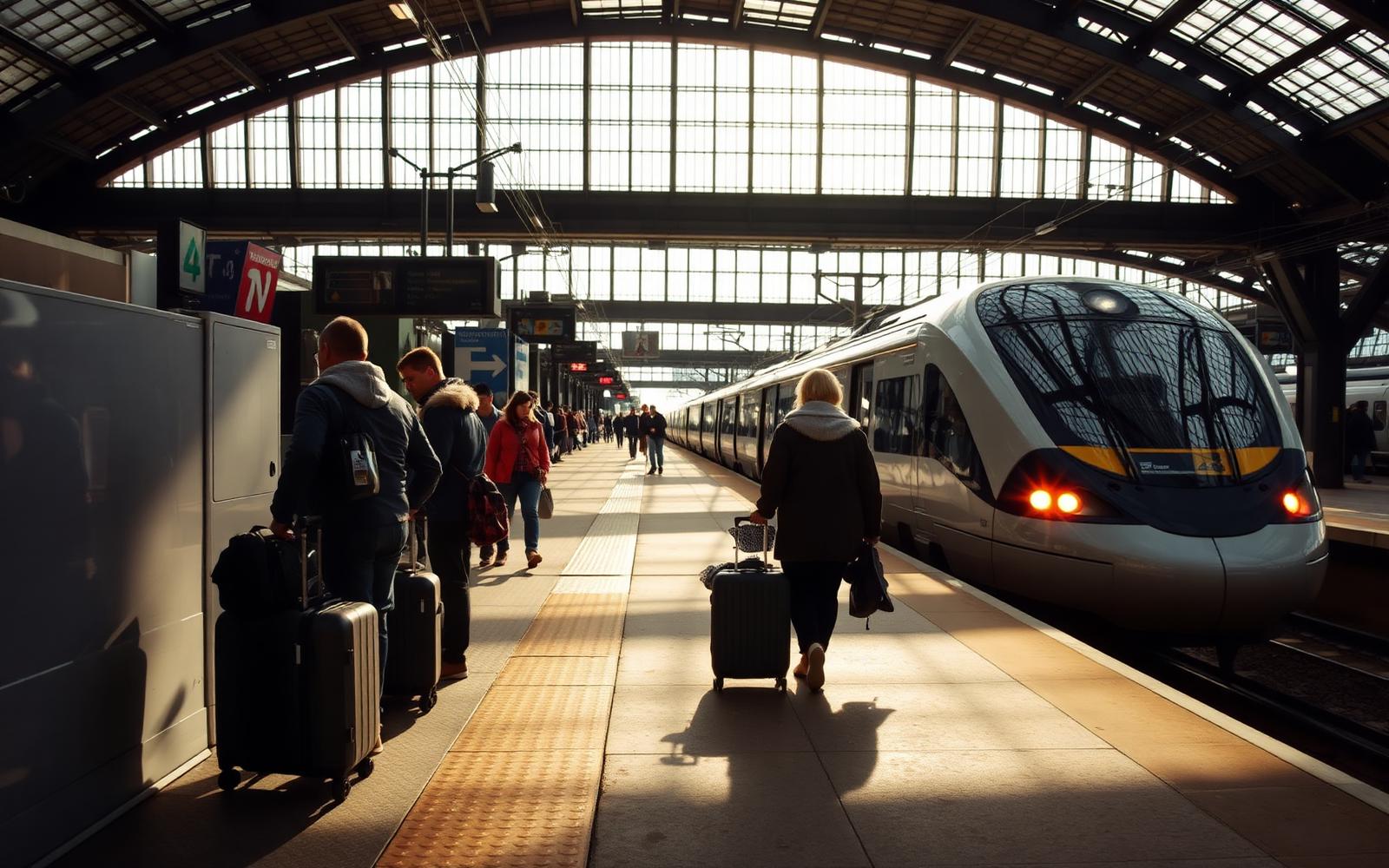
Check which terminal the station serves
At Charles de Gaulle the TGV station is at Terminal 2. If your flight departs from Terminal 1 or Terminal 3 you still need the CDGVAL shuttle, which adds around 15 to 20 minutes with luggage. Plan the internal transfer as a separate step.
A handful of airlines sell the train as a flight segment. When they do, the train carries a flight number, appears on your booking as a leg of the journey, and the airline takes responsibility if the rail leg fails.
The advantage is not the price, which is usually similar. It is the protection. If the train arrives late and you miss the flight, the airline rebooks you at no cost, because both legs sit on one contract of carriage.
How to tell if the rail leg is really protected
Look at the booking confirmation. If the train segment has a flight number such as LH followed by four digits, and appears in the same itinerary as the flight, it is protected. If you received a separate rail booking reference and a separate receipt, it is not, no matter which website sold it to you.
Two bookings, same trains
A traveler going Stuttgart to Frankfurt to Singapore books the ICE as a Lufthansa Express Rail segment. Her colleague books the identical train directly with Deutsche Bahn and the flight separately, saving nine euros. Overhead line damage delays both by 70 minutes. She is rebooked onto the evening departure at no cost. He buys a new one-way ticket.
Most rail-plus-air journeys are unprotected, because travelers book the cheapest train separately. That is fine, provided you treat the train exactly as you would a separate airline ticket and pad accordingly.
The reverse direction is easier. On arrival, a delayed flight simply means you take a later train, and most operators will move a flexible ticket. This is why rail works particularly well as the final leg of a journey and needs more care as the first.
Trains do not check your bags through to your final destination in most of Europe, with a few historic exceptions. You carry everything onto the train and check in at the airport as normal.
Rail strikes are a scheduled risk, not a surprise
Industrial action on French and German networks is typically announced days in advance and published on the operator's site. If your flight is expensive and non-refundable, check for announced action before you rely on a train, and be prepared to move to a coach or an earlier departure.
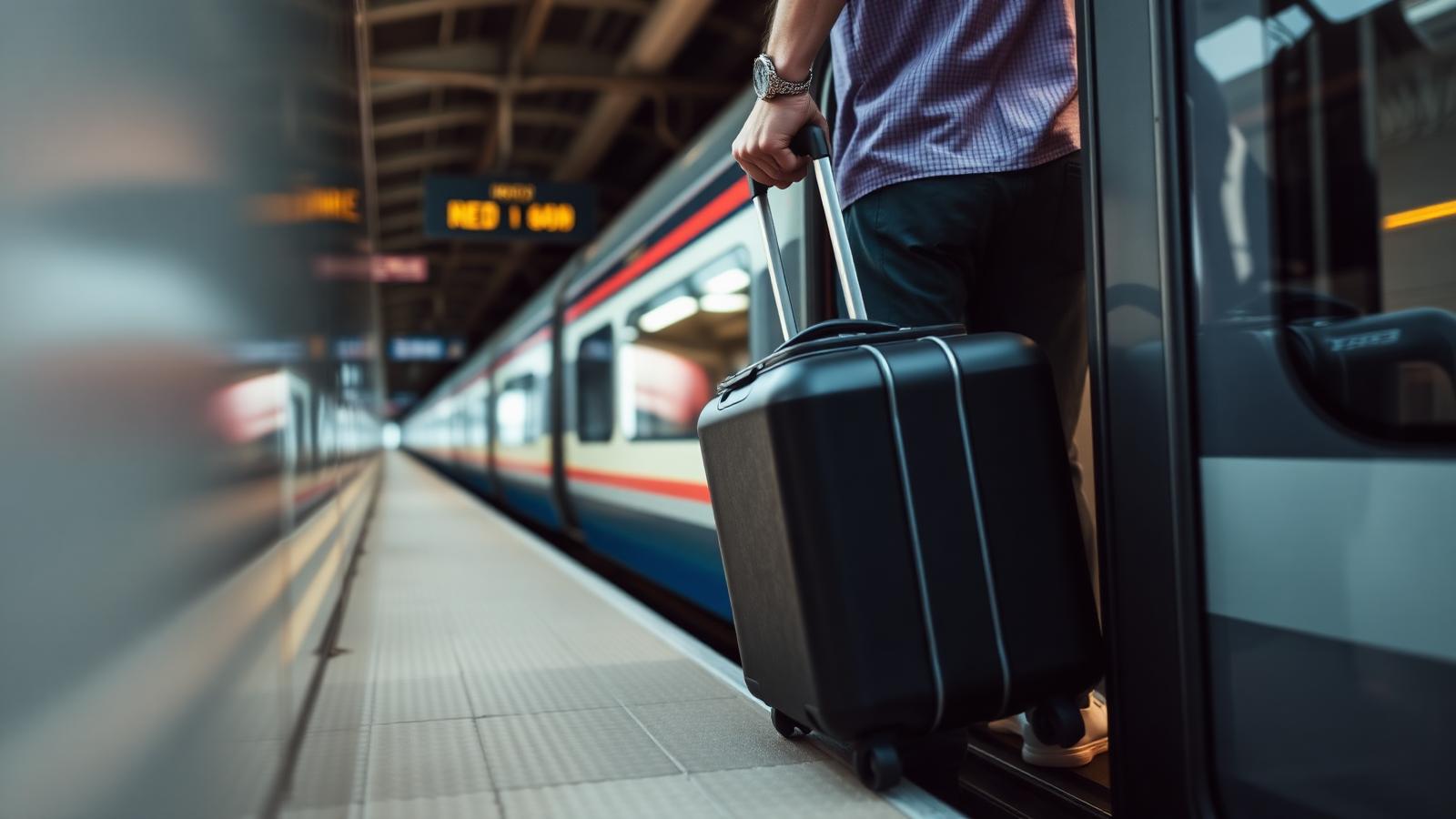
Germany, France, Switzerland, the Netherlands and Japan all have airports built around real railway stations, which makes the combination straightforward. Spain and Italy are improving but still route most airport rail through the city rather than direct.
In North America the picture is thinner. Newark has a rail link into the national network via a monorail, and Baltimore and Philadelphia sit on the Northeast Corridor, but for most journeys the domestic feeder flight remains the practical option.
Consider rail for the return even if you fly out
Some of the best itineraries are asymmetric. Fly into the hub in the morning when a delay costs you little, and take the train home on the return, when a delayed flight simply pushes you to the next departure rather than costing you a ticket.
Rail replaces the least reliable part of many journeys. Under roughly 500 kilometres, with a station inside the terminal, it is usually faster door to door than the feeder flight it replaces.
Protection is the deciding factor. A train sold with a flight number is covered by the airline. A separately booked train is a separate contract, and a delay is entirely your problem.
When the rail leg is unprotected, plan to arrive three hours before a long-haul departure, identify one earlier train, and add time for changes, weekend engineering works and terminal shuttles.
Rail is at its strongest as the final leg of a trip, where a delayed flight simply means a later train, and needs the most care as the first leg, where a delayed train can cost you the flight.
Related
Guides that answer the questions readers usually have immediately after this one.
The fare looks better. Then ground transport, timing and risk enter the calculation.
Read Guide
The uncomfortable answer, and the three moves that limit the damage.
Read Guide
Where slack actually protects you, and where it just wastes a day.
Read GuideNext steps
Airline Rules Desk
Travel Documents
Airport Guides
Updated 14 July 2026
Updated 9 July 2026
Updated 27 May 2026
Updated 25 May 2026
Newsletter
A short email when a rule changes, a new guide lands, or a document requirement shifts. No promotions, no fares, no noise.
Open the Helpdesk. Eight desks, one structure, and an answer to the question you actually have.