
Flight Delays6 min
Overnight Disruption: A Calm Checklist
What to secure first when a flight is cancelled late in the evening.
Read GuideThe evidence that makes later claims straightforward instead of exhausting.
Rules change without notice. Confirm anything time-critical with the airline, airport or border authority handling your journey before you travel. Read our fact checking policy.
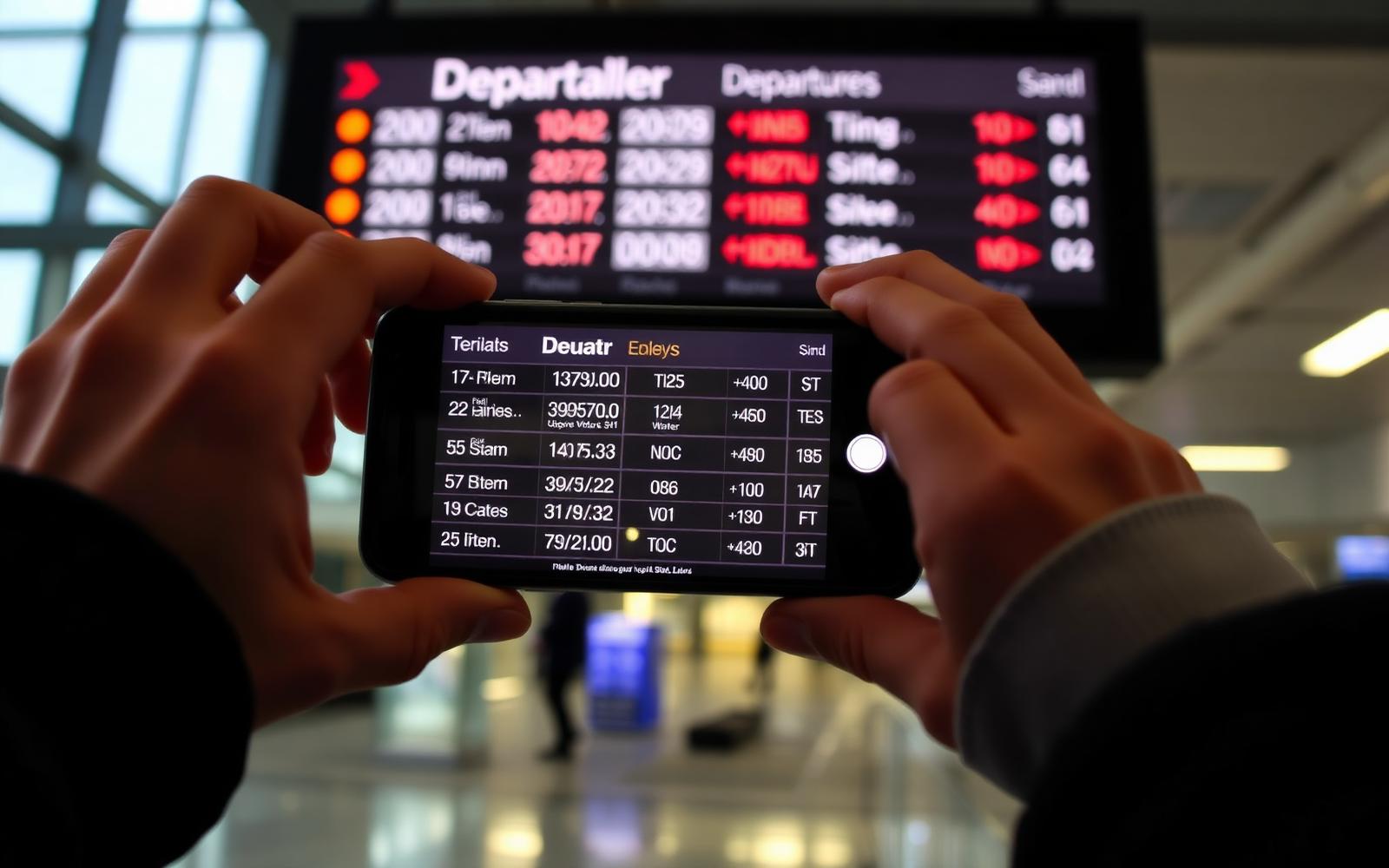
Photograph the board, keep boarding passes, log times, and save every written communication.
Take a timestamped photo of the departure board at each change.
Ask for written confirmation of the delay reason.
Keep receipts and boarding passes together in one folder.
Two passengers sit on the same delayed flight out of Gare de Lyon. Six weeks later, one of them has a compensation payment in their account and the other has an email thread going nowhere. The difference is rarely the airline being generous with one and stingy with the other.
The difference is almost always documentation, gathered in the moment rather than reconstructed from memory weeks later.
A disruption claim, whether it is compensation, a refund, or reimbursement for a hotel and meals, is decided on paper. Airlines and the agencies that review disputes are not evaluating how frustrating your evening was. They are evaluating what you can show.
This guide sets out exactly what to capture, when, and in what format, so that if a claim becomes necessary later, the case builds itself instead of becoming a reconstruction project.
Almost every disruption claim comes down to four categories of evidence. Missing any one of them weakens the claim considerably, even if the other three are solid.
Keep one folder, not four
Create a single folder on your phone the moment disruption starts. Everything goes into it as it happens, rather than being scattered across messages, emails and photo albums.
A departure board that shifts from 'On Time' to 'Delayed' to 'Cancelled' over three hours tells a story that a single photo cannot. Photograph it at each change, with your phone's default camera so the timestamp metadata is preserved.
At a large hub like Charles de Gaulle 2E or Dubai DXB, the board for your specific flight can be one line among two hundred, so make sure the flight number is clearly legible in the frame, not cropped out to get a cleaner shot.
Why the sequence matters more than one photo
A traveler at Frankfurt photographed the board showing '20:15, Delayed' and again ninety minutes later showing 'Cancelled'. The gap between the two photos was later used to establish that the airline knew about the mechanical issue well before it announced the cancellation, which affected the compensation outcome.
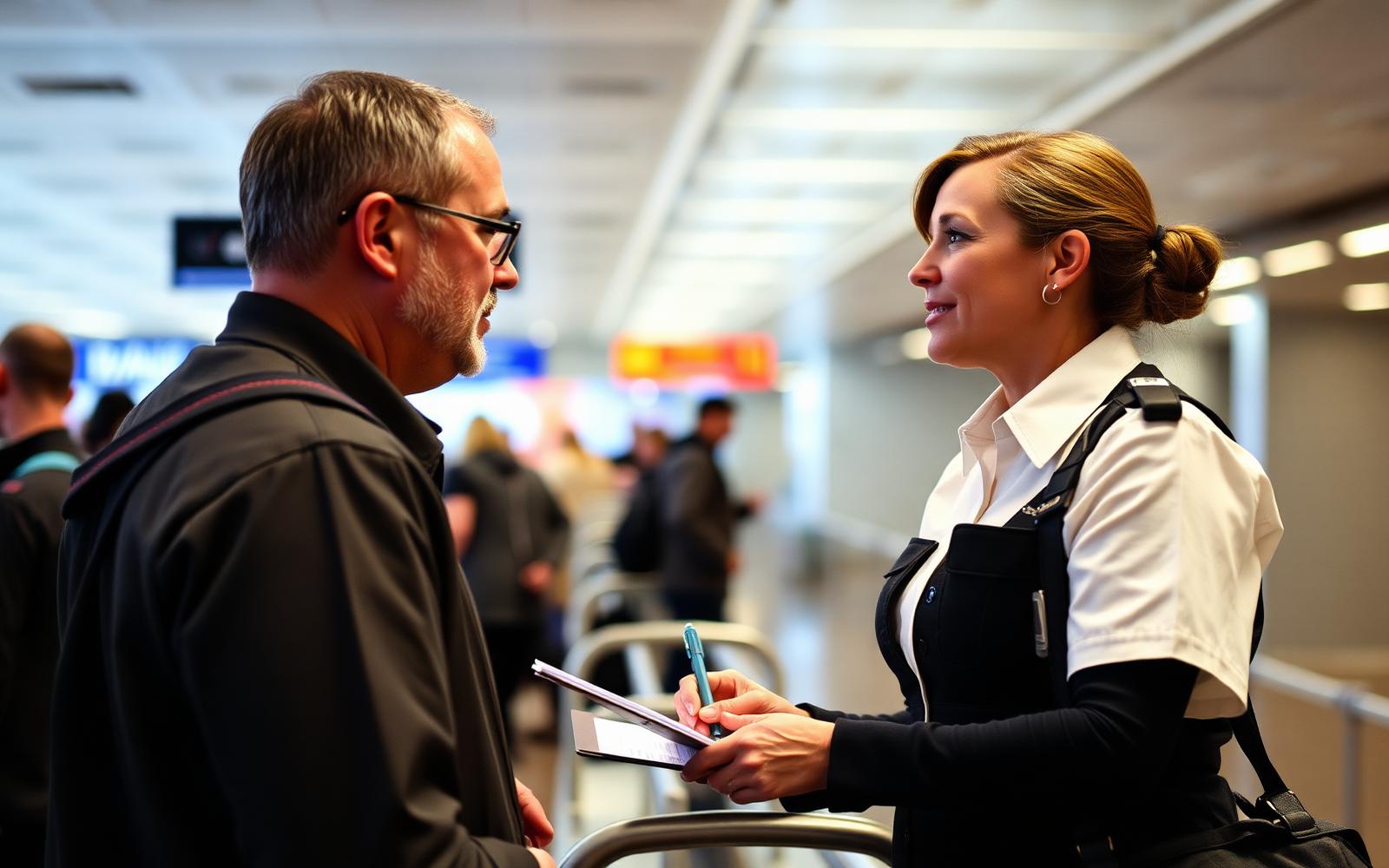
Staff at the gate or the service desk will usually give you a verbal reason for a delay or cancellation. That reason matters enormously, because 'extraordinary circumstances' like severe weather are treated very differently from 'operational issues' like crew scheduling or a technical fault.
Ask politely for the reason to be confirmed by email, text, or on a printed slip if the airline issues one. If they cannot provide it on the spot, note the name of who told you, the time, and exactly what was said.
Reasons sometimes change later
Airlines occasionally revise the stated cause of a cancellation once it is formally logged, and the later version can differ from what a gate agent said in the moment. Your contemporaneous note is what protects you if that happens.
If you are rebooked, you may be issued a second or even third boarding pass. Keep all of them, including the one for the flight you never actually took. It proves you were booked, checked in, and then displaced.
A meal receipt with no other information is weak evidence on its own. Write the flight number and date directly on the paper receipt, or attach a note to the digital one, at the time you get it.
| Expense | What to capture | Common mistake |
|---|---|---|
| Hotel | Receipt, dates, distance from airport | Losing the receipt after checkout |
| Meals | Itemised receipt, not just a card slip total | Only keeping the card slip, which has no itemisation |
| Transport | Taxi or transfer receipt with time | Paying cash with no receipt at all |
| Replacement ticket | Full booking confirmation | Screenshotting only the price, not the itinerary |
Currency matters
If you paid in a local currency different from your card's home currency, keep the receipt showing the original amount as well as what appeared on your statement.
Emails, app chat transcripts and text messages from the airline are often stronger evidence than anything you capture yourself, because they come directly from the airline's own systems.
Screenshot chat conversations in full, including timestamps, rather than relying on the chat history remaining available later. Some airline apps delete older conversations after a set period, and Ryanair's chat history in particular has been known to reset between sessions.
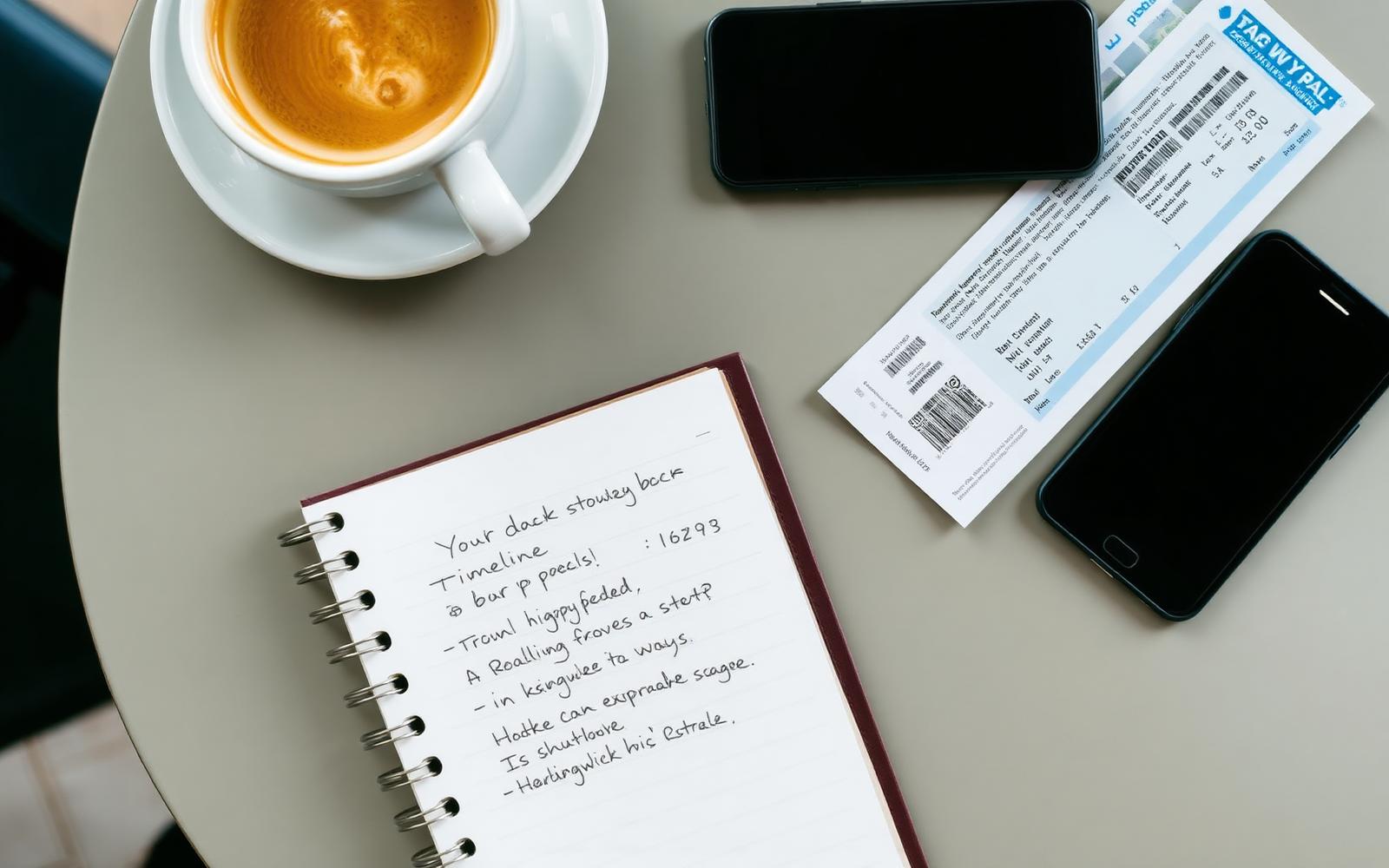
A basic timeline, even a few lines in a notes app, is often the single most persuasive document in a disputed claim. It does not need to be formal.
Write it as it happens
A timeline written that night is far more credible, and far more accurate, than one reconstructed from memory a week later.
Once the trip is over, spend twenty minutes consolidating everything into one document or folder before it gets lost among holiday photos and other files. Label each item clearly with the date and what it shows.
This step is the one most people skip, and it is the one that costs the most time later if the airline disputes any part of the claim.
Good documentation during a disruption is not about anticipating a lawsuit. It is about giving your future self, and whoever reviews your claim, an accurate and complete record instead of a fuzzy memory of a stressful evening.
The habits in this guide take only a few minutes at each stage, and they compound. A photographed board, a written reason, and an organised folder of receipts turn a frustrating night into a straightforward paper trail.
None of this guarantees a specific outcome, since compensation and reimbursement rules vary by airline, route and jurisdiction. What good documentation guarantees is that your case will be judged on facts rather than on how well you happened to remember the evening weeks later.
This guide was written and checked against the following categories of primary source.
Air passenger rights regulators
Delay, cancellation and denied-boarding thresholds and duty of care obligations.
Official airline disruption policies
Carrier commitments on rebooking, meals and overnight accommodation.
Airport authority guidance
Operational status, disruption handling and passenger facilities during irregular operations.
Related
Guides that answer the questions readers usually have immediately after this one.
What to secure first when a flight is cancelled late in the evening.
Read Guide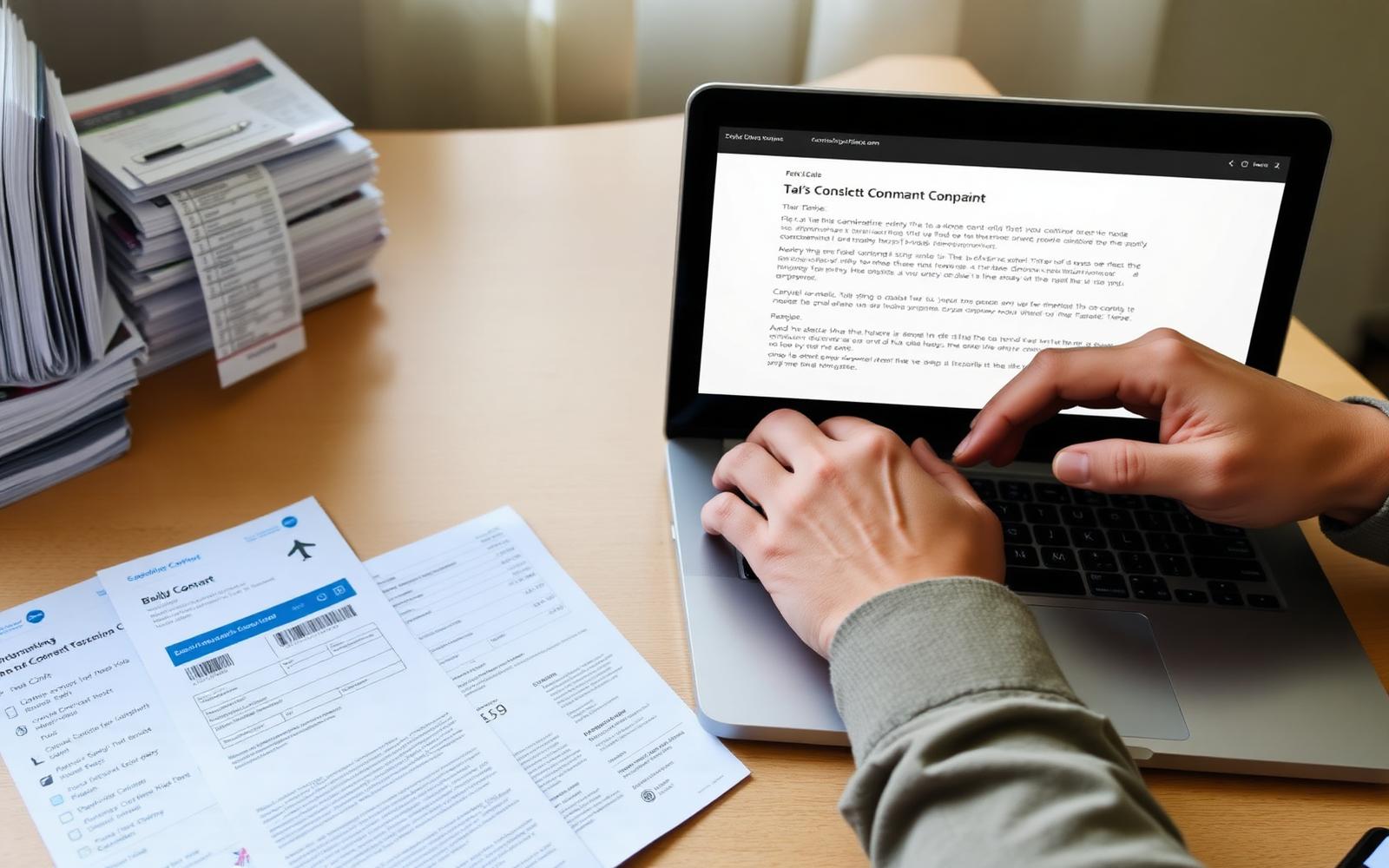
Structure, evidence and tone: the three things that decide the outcome.
Read Guide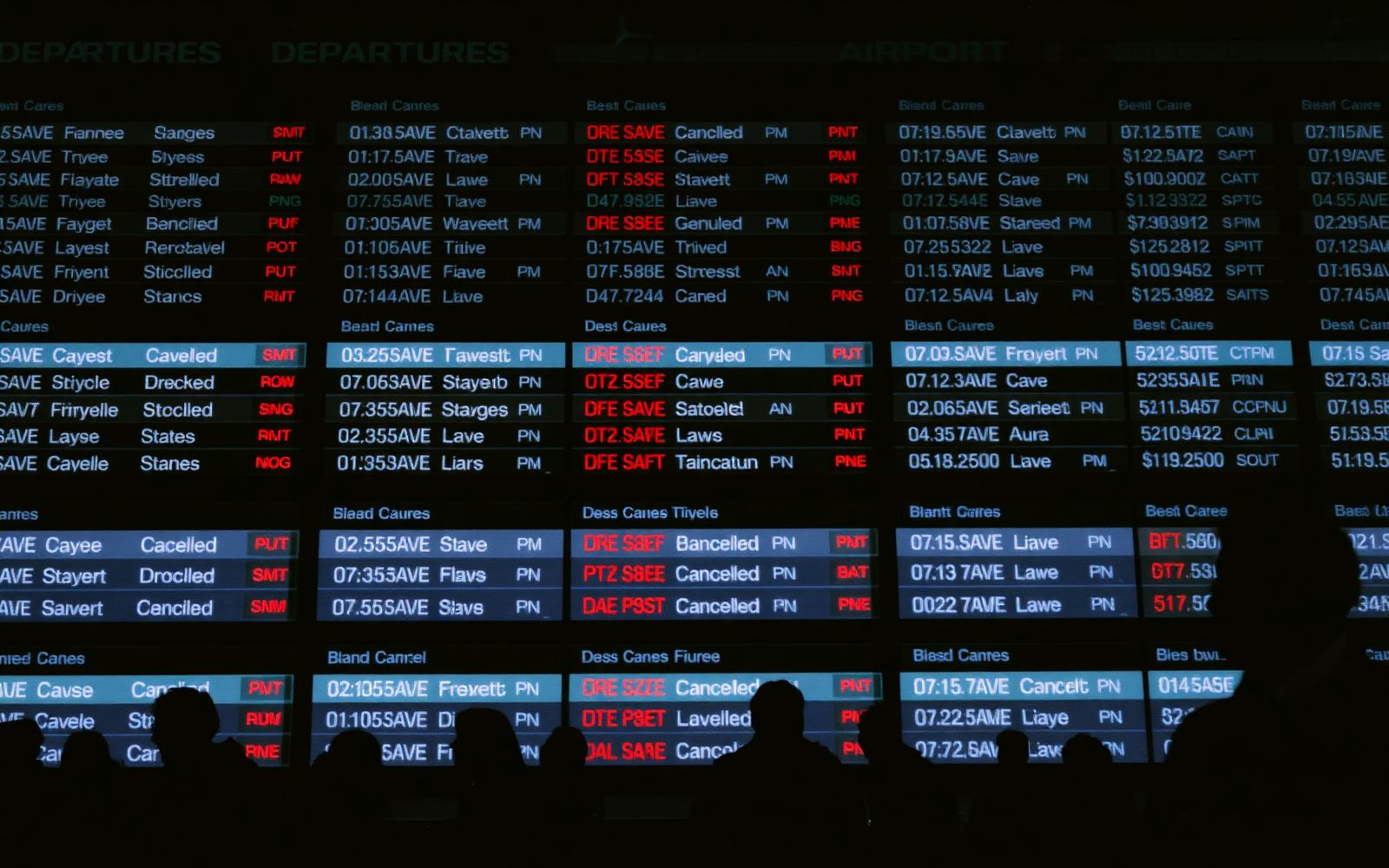
The label on the board changes your options, your entitlements and your next move.
Read GuideNext steps
Airline Rules Desk
Airport Guides
Refund Help
Updated 20 July 2026
Updated 14 July 2026
Updated 9 July 2026
Updated 2 July 2026
Newsletter
A short email when a rule changes, a new guide lands, or a document requirement shifts. No promotions, no fares, no noise.
Open the Helpdesk. Eight desks, one structure, and an answer to the question you actually have.