Travel Documents5 min
How Much Passport Validity You Actually Need
The six-month rule is common, but it is not universal and it is not always measured the same way.
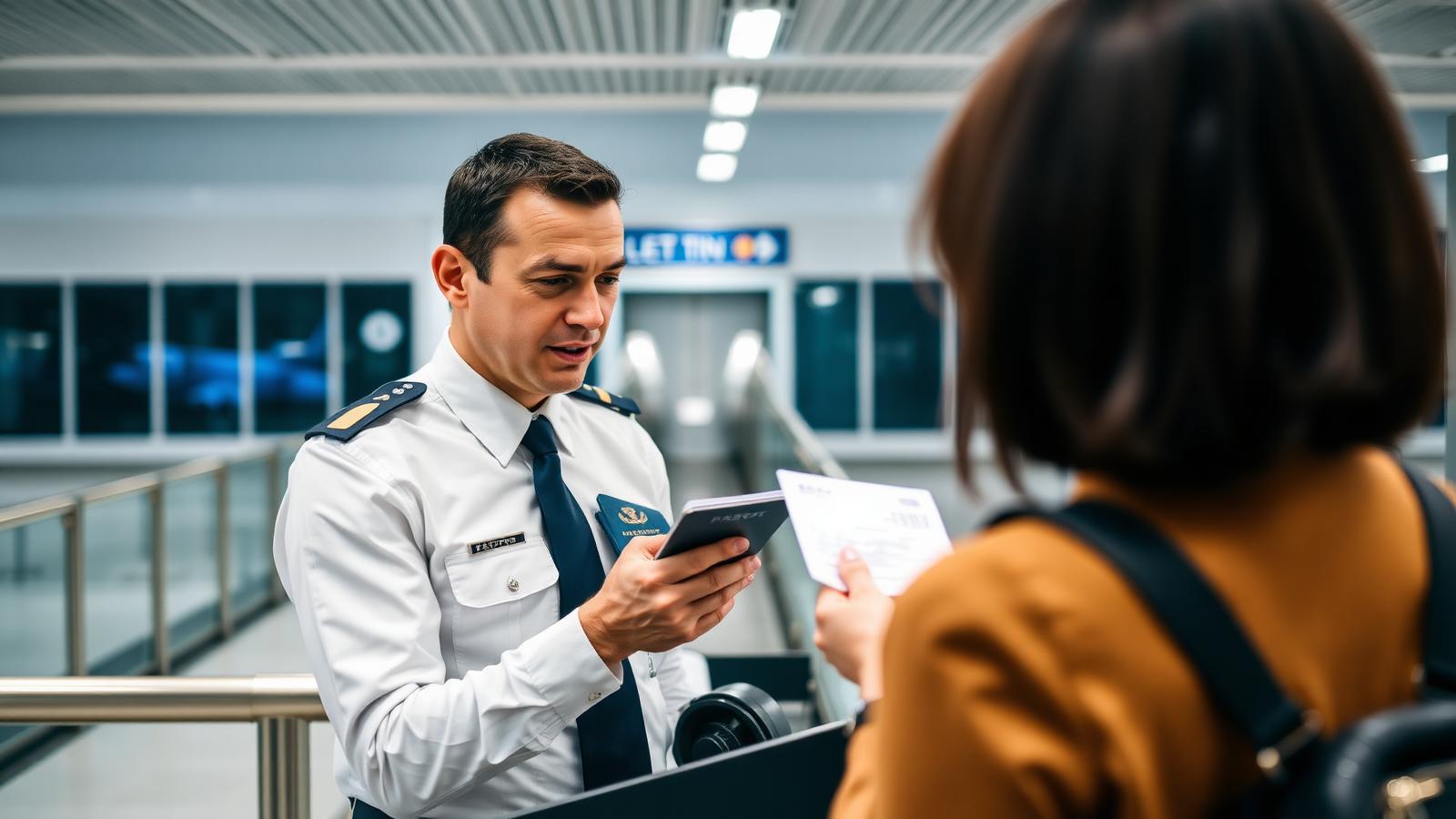
Read GuideAirlines are checked at the border too, which is why they refuse boarding when documents look wrong.
Rules change without notice. Confirm anything time-critical with the airline, airport or border authority handling your journey before you travel. Read our fact checking policy.
Yes. Carriers face penalties for transporting inadmissible passengers, so they refuse when in doubt.
Carry printed evidence of visas, permits and onward travel.
Verify requirements on the destination's official government site.
Ask for the specific rule being applied if you are refused.
A confirmed ticket does not guarantee a seat on the plane. It only guarantees the seat if your documents match what the destination country expects, and airlines are the ones who get fined when they get that wrong.
That single fact explains almost every denied boarding case tied to paperwork, from a passport six days short of validity to a missing transit visa nobody thought to check.
Take the case of a traveler flying Istanbul to a country that requires six months of passport validity beyond the arrival date. The airline agent at check-in is not being difficult by asking about the expiry date; she is protecting the airline from a fine that can run into thousands of euros per passenger under carrier liability rules.
This guide walks through why airlines have the power to refuse boarding over documents, which situations trigger it most often, and what to carry so it does not happen to you.
Under carrier liability rules used by most countries, an airline that transports a passenger who is then refused entry is responsible for flying that passenger back, and often pays a fine on top of it. Governments push this responsibility onto airlines because it is cheaper than staffing every departure gate with immigration officers.
That is why check-in staff for Emirates, Lufthansa, or Delta are trained to check visas, transit requirements, and passport validity before you ever reach a real border officer. They are doing pre-screening on behalf of the destination government.
This is not the airline being unreasonable
When an agent seems overly cautious about a document, remember she is applying someone else's rule under her own financial risk. Frame your questions around the specific rule, not the agent's judgment.
| Document issue | Where it bites hardest | Fix before travel |
|---|---|---|
| Short passport validity | EU Schengen area, many Gulf states | Renew if under 6 months validity remains |
| No transit visa | Layovers through Istanbul, Doha, certain US connections | Check the transit rule for that specific hub, not just the final destination |
| No onward ticket | Thailand, Indonesia, several Caribbean nations | Book a fully refundable return or onward flight |
Countries that require proof of onward travel are effectively asking the airline to confirm you are not planning to overstay. A one-way ticket with no visible exit plan is the single most common reason for a document refusal that has nothing to do with a visa at all.
Cheap fix for long trips
If your actual plan is open-ended, book a fully refundable onward flight for a date near your visa-free limit, print the confirmation, and cancel it later if plans change.

Some passengers assume that never leaving the airport means no visa is needed. That is true for many hubs, false for others. Certain nationalities transiting through specific countries need a transit visa even if they stay airside the entire time.
Check the hub, not just the destination
A traveler flying to Nairobi with a layover in Dubai and one flying the same route with a layover in a different city can face completely different transit rules. Always check the specific connecting airport's requirement for your nationality.
Ask the agent to name the specific rule being applied, in writing if possible. This helps if you want to appeal later, and it also occasionally reveals that the agent misread a requirement that a supervisor can correct on the spot.
Check the destination country's official immigration website immediately, on your phone, at the counter. A printed screenshot of the correct rule has resolved more borderline refusals then any amount of arguing.
A recoverable case
A traveler flying Lufthansa to Frankfurt with a connection onward was initially refused for lacking a transit visa. A supervisor confirmed that his nationality was exempt for transits under 24 hours, and he reboarded within the hour.
Denied boarding compensation schemes, including EU261, generally exclude refusals caused by the passenger's own documents. That protection is built for overbooking, not for a passport that expired early.
This is worth knowing before you spend time drafting a compensation claim that a document-related refusal will not qualify for.
Denied boarding over paperwork almost always traces back to a rule that existed before you booked the flight, sitting on a government website the airline is legally bound to enforce.
The travelers who avoid this problem are the ones who treat document checks as part of booking, not something to sort out at the counter. A five-minute check of validity, transit rules, and onward proof costs nothing and prevents almost every version of this scenario.
If it does happen anyway, get the specific rule in writing, check the official source yourself, and ask for a supervisor before assuming the refusal is final.
This guide was written and checked against the following categories of primary source.
Official airline baggage policies
Published cabin and checked baggage allowances, dimensions and fees.
Aviation safety regulators
Restricted and dangerous goods rules, including lithium battery carriage.
International aviation organisations
Industry guidance on baggage handling and dangerous goods classification.
Related
Guides that answer the questions readers usually have immediately after this one.
The six-month rule is common, but it is not universal and it is not always measured the same way.
Read Guide
Staying airside is not always enough. Some countries require a visa to pass through at all.
Read Guide
Airlines sometimes ask before border officers do. Here is what satisfies the check.
Read GuideNext steps
Travel Planning
Travel Change Desk
Airport Guides
Updated 20 July 2026
Updated 14 July 2026
Updated 9 July 2026
Updated 2 July 2026
Newsletter
A short email when a rule changes, a new guide lands, or a document requirement shifts. No promotions, no fares, no noise.
Open the Helpdesk. Eight desks, one structure, and an answer to the question you actually have.