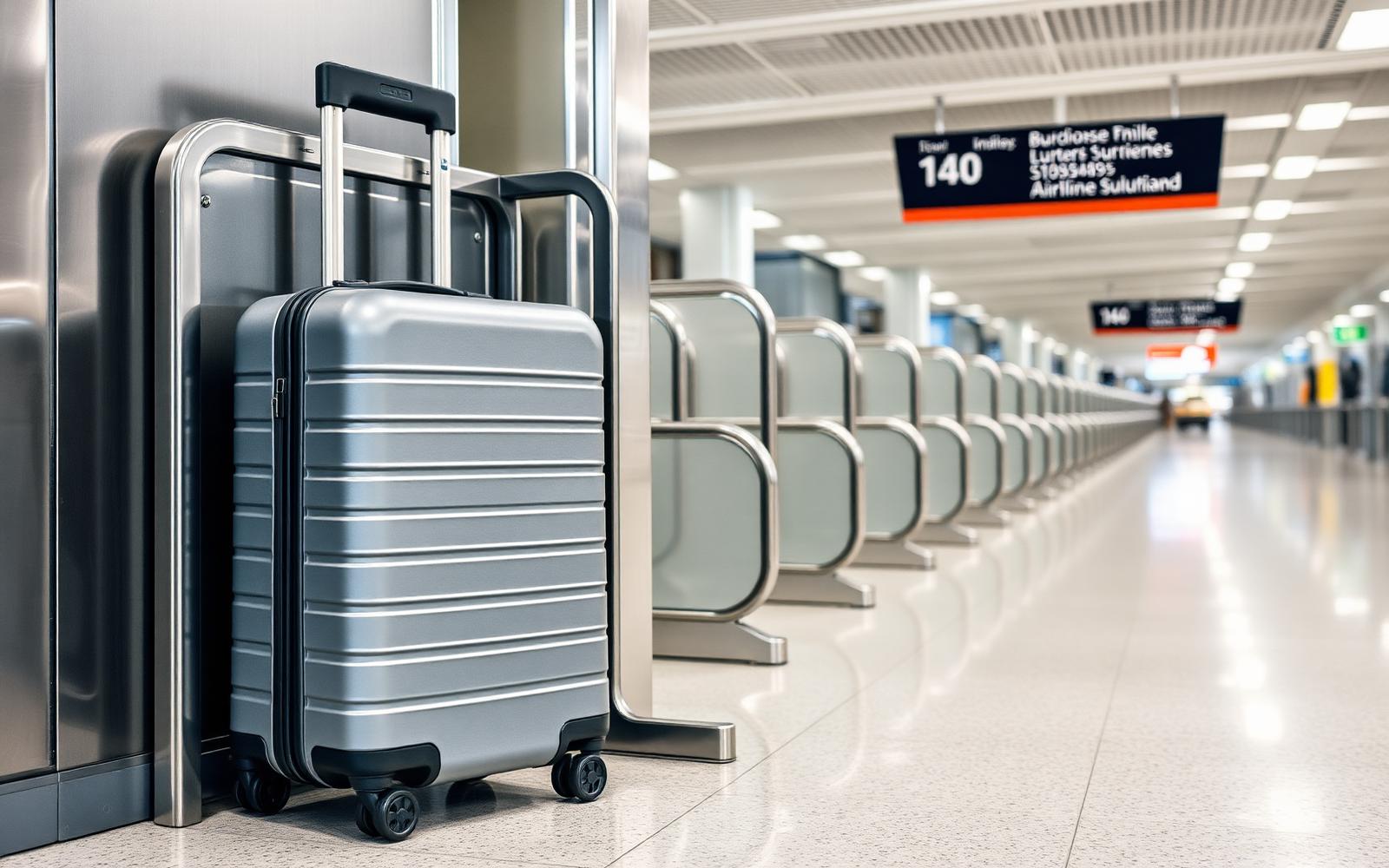
Airline Rules Desk4 min
How Carry-On Size Is Measured at the Gate
The sizer decides, not the label on your suitcase. Here is how to pass it every time.
Read GuideWhere they can go, what capacity is allowed, and why the rule exists.
Rules change without notice. Confirm anything time-critical with the airline, airport or border authority handling your journey before you travel. Read our fact checking policy.
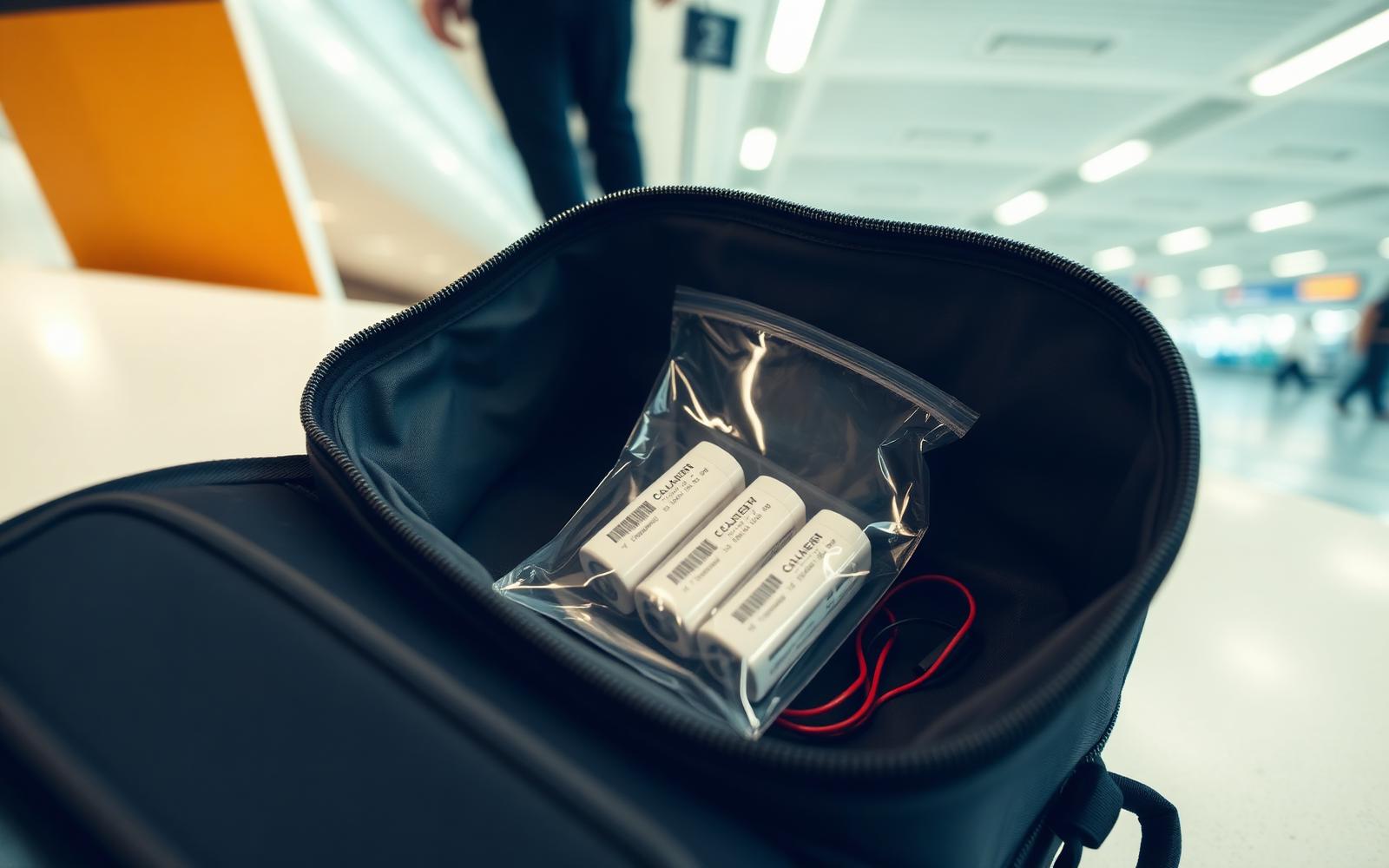
Spare lithium batteries and power banks belong in the cabin, never in checked baggage.
Check the watt-hour rating printed on the device before you fly.
Carry batteries in a protective case with terminals covered.
Declare high-capacity batteries to the airline in advance.
Every few months a video surfaces of a phone or a power bank smoking on a plane, and the story spreads faster than the actual rule ever will. The rule itself is not complicated, but it is scattered across three different sources: the airline's own policy, the IATA dangerous goods guidance, and whatever the security officer in front of you decides to enforce that morning.
This guide pulls those three together into one working answer. It covers spare lithium batteries, power banks, e-cigarettes, and the watt-hour math that determines what you can bring at all.
None of this is exotic. A commuter flying Lufthansa out of Frankfurt with a 20,000mAh power bank in her backpack is affected by the same math as a backpacker flying Emirates out of Dubai DXB with two spare camera batteries taped together. The rule does not care about your itinerary, only about the battery in your hand.
Lithium batteries store a lot of energy in a small package, and when they fail they fail through thermal runaway, not a gentle short circuit. A damaged or overheating lithium cell can ignite quickly and burn hot enough to defeat a standard cargo fire suppression system.
That is the actual engineering reason spare batteries are banned from checked luggage on nearly every airline. In the cabin, a crew member can see smoke and react in seconds. In the hold, nobody can.
It is about spares, not devices
A laptop or phone with its battery installed is treated differently from a loose spare battery. Installed batteries in checked bags are generally tolerated because they are inside a device; loose spares are the real target of the rule.
Every lithium-ion battery has a watt-hour rating, usually printed in small text on the battery itself or on the underside of a power bank. If it only lists milliamp-hours (mAh) and voltage, you can calculate it: watt-hours equal mAh divided by 1000, multiplied by voltage.
Quick calculation
A common 20,000mAh power bank rated at 3.7V works out to about 74Wh. That falls comfortably under the 100Wh threshold most airlines use, so it travels in carry-on without any paperwork.
| Watt-hour rating | Typical rule | What you need |
|---|---|---|
| Under 100Wh | Allowed in cabin, unlimited reasonable quantity | Nothing extra |
| 100Wh to 160Wh | Allowed in cabin, usually limited to two spares | Airline approval in advance |
| Over 160Wh | Banned as checked or carry-on for passengers | Cargo shipment only, if at all |
Cannot find the rating
If a battery has no printed watt-hour figure and no way to calculate one, some agents will refuse it outright rather than guess. Bring the original packaging or a manufacturer spec sheet if the rating is not visible.
Power banks are classified as spare batteries no matter how they are packaged, because they exist purely to hold and discharge lithium cells. That means the checked-bag ban applies to every power bank you own, including the small keychain ones.
Ryanair and similar carriers enforce this at the gate
On low-cost carriers like Ryanair, gate staff have started spot-checking bags that get gate-tagged for the hold. A forgotten power bank found during that check can mean it is confiscated on the spot, not just flagged.
E-cigarettes and vapes follow the same logic: cabin only, never in the hold, and most airlines ask that they be fully powered off, not just in standby, for the flight.
IATA sets the baseline, but individual carriers can be stricter. ANA, for instance, asks passengers with batteries between 100 and 160Wh to notify the airline at least a day before departure, not just show up with paperwork at check-in.
Delta and LATAM generally follow the IATA thresholds without extra notice requirements for the 100 to 160Wh band, but they still reserve the right to refuse anything that looks damaged, swollen, or improperly labeled.
This is the part travelers underestimate: an officer's judgment about physical condition overrides a technically compliant watt-hour rating every time. A battery with a dented casing can be turned away even if it is well under 100Wh.
A battery that is swollen, cracked, or leaking is not allowed on the aircraft in any form, cabin or hold. This is not negotiable at the checkpoint, and trying to argue it usually just costs you time.
If a device has been publicly recalled for battery issues, most airlines will refuse to accept it entirely, even powered off, until you can show proof of the manufacturer's repair or replacement program.

Security checkpoints do not typically offer to hold confiscated batteries for pickup on your return, unlike some liquids policies at smaller airports. Once it is taken, assume it is gone, and budget for a replacement at your destination.
The lithium battery rule is one of the few airline policies that is genuinely about physical safety rather than revenue, which is why it gets enforced so consistently across carriers that otherwise disagree on almost everything else.
If you remember one number, make it 100Wh, and if you remember one habit, make it packing spares in the cabin, not the checked bag. Everything else, from ANA's advance notice request to a swollen battery being turned away outright, sits downstream of that basic structure.
When in doubt about a specific device, the manufacturer's spec sheet and the airline's own dangerous goods page will settle it faster then a debate at the checkpoint ever will.
This guide was written and checked against the following categories of primary source.
Official airline baggage policies
Published cabin and checked baggage allowances, dimensions and fees.
Aviation safety regulators
Restricted and dangerous goods rules, including lithium battery carriage.
International aviation organisations
Industry guidance on baggage handling and dangerous goods classification.
Related
Guides that answer the questions readers usually have immediately after this one.
The sizer decides, not the label on your suitcase. Here is how to pass it every time.
Read Guide
The short list that turns a lost bag into an inconvenience rather than a crisis.
Read Guide
Small preparation habits that consistently save ten to fifteen minutes.
Read GuideNext steps
Travel Change Desk
Route Alternatives Desk
Airport Guides
Updated 14 July 2026
Updated 9 July 2026
Updated 25 June 2026
Updated 18 June 2026
Newsletter
A short email when a rule changes, a new guide lands, or a document requirement shifts. No promotions, no fares, no noise.
Open the Helpdesk. Eight desks, one structure, and an answer to the question you actually have.